以下の内容はhttps://wildbirdpark.blog.jp/archives/cat_362507.htmlより取得しました。


• The period from 10th to 16th May is Japanese Bird Week, which was officially designated in 1950

There are no words to describe the beauty of the Bird Park in May!  It really is something to see. We can only say ‘Please visit the park and see for yourself!

May is the brightest month in the year. All the trees with freshly sprouted green leaves and all the grasses shoot up and grow out quickly. The park is covered with variations of light green color which then quickly turns into a deep green color over time.

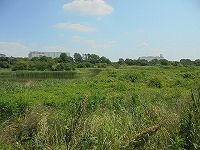
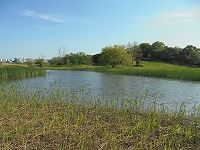
The fresh water pond in the eastern part of the park, which once seemed to be “moor” in February, is now a very beautiful “meadow,” and this will all soon be covered with a very thick and tall reed bed. We eagerly look on to see if the Little Grebe and the Moorhen have little nests somewhere in the reeds.
1705_RengersMessege_1_DSC023951705_RengersMessege_2_DSC03274

Beautiful meadow! The East Freshwater Pond

The summer birds, such as the Little Ringed Plover, Little Tern, Barn Swallow and Oriental Reed Warbler join the regular members of the park while the winter residents, the Pale Thrush, Dusky Thrush, Daurian Redstart, Reed Bunting have all moved on to other places. The park also hosts stopover habitats for many waders on the way to their northern breeding sites. The Whimbrel, Grey-tailed Tattler and Ruddy Turnstone can be commonly observed at the tidal flats in Shioiri brackish water pond.
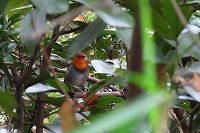
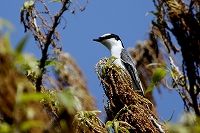
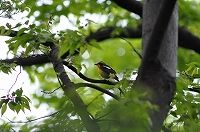
Among those birds are small song birds which might pass through the park in an instant and in obscurity. They are the Ashy Minivet, Narcissus Flycatcher and Japanese Robin. Some of them generously delighted lucky rangers and visitors with their beautiful songs. Normally these birds breed far away, deep in the mountain areas.
1705_RengersMessege_3_1704271705_RengersMessege_4_1704241705_RengersMessege_5_170419

Photo: Narcissus Flycatcher / Japanese Robin / Ashy Minivet

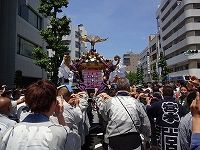
Besides celebrating nature, Tokyo conducts several big festivals in May. Those are Kanda-myojin-matsuri, Shitaya-jinjya-matsuri, and Sanja-matsuri. These festivals are characterized by special “Mikoshi,” portable shrines. The Mikoshi is a temporary vehicle for god and the parish people join forces to bear it for moving through their township. Sanja-matsuri, for example, is definitely the most important day of the year for Asakusa residents. The chief ranger of the park will participate in the Sanja-matsuri which signifys the beginning of summer for the residents!
1705_RengersMessege_6_DSC06952
Sanja-matsuri, The Honshya-Mikoshi Ichino-mya  

April is the prime month of spring with trees and flowers showing lively fresh green colors. Cherry blossoms in full bloom are a highlight of the season but in April the number of plants flowering is not necessarily that many. Visitors may be able to observe more flower and blossoms in May.

The birds are also in their early period of transition from winter to summer. There is still a variety of ducks in the ponds. But they will be leaving to return to the north, so the numbers will decrease towards the end of the month. Some migratory shorebirds, such as Greenshanks and Whimbrels may appear on tidal flats in the park. Some lucky visitors may be able to observe the cherished song birds in the park towards the end of the month. Those are the Blue-and-White Flycatcher, Narcissus Flycatcher and Crowned Willow Warbler. They may stay in the park for only a few days on their way to mountainous areas where they will prepare for their breeding season.
  

One of the biggest tasks of the year for the rangers, is reed bed clearing work which was successfully carried out in the last month. We expect healthy and well-grown reed beds in the pond and hope active breeding of the Great Reed Warbler, Common Moorhen and Little Grebes in the summer.


April is the threshold of new cycle of nature from winter to spring. The month is also the threshold of new Financial Year of Japan. New students start the new school year and new employees enter companies with great dreams and visions. Many organizations make changes in the staff, including the Wild Bird Society of Japan as well. Ms. Shimamura and Mr. Aoki, after a few years of dedicated service in the park, will transfer to the Head Office of the society in Gotanda. The park receives new rangers Ms. Naganawa and Mr. Onda who are welcomed by the staff. We sincerely thank Ms. Shimamura and Mr. Aoki for their excellent performance in their period at the park.


The scenery will change drastically in thepark.  March is the transition month fromwinter to spring.  In the middle of themonth beneath shrubs and reed beds fresh greens begin to sprout. The park willstart showing vivid changes of color from the winter withered brown to verduregreen toward the end of the month.  Springis coming!


According to the cherry blossom forecast byauthorities in 2017, it seems to hit Tokyo in the end of March.  The simultaneous blooms of cherry blossoms area symbol of spring in Japan, although they may not be so common in thepark.  Natural forest areas such as the forestin the eastern part of the park, is a tough place for cherry trees to survive.  They are not a member of the natural forestcommunity in Tokyo Bay area, so if you would like to enjoy “Hanami” (Cherryblossom viewing) you would be better off visiting Ueno Park or Sumida Park.


For bird viewing in March however will havea relatively large number and variety of ducks in the ponds again.  They will stay for a while before flying backnorth, eventually in April. Winter resident such as the Pale Thrush, Dusky Thrush,Daurian Redstart and Reed Bunting will stick around along with new arrivals theLittle Ringed Plover and Barn Swallow. They will arrive in the park toward theend of the month as vanguard of the summer resident.
Ringed Plover


In the middle of the month, probably on the22nd and 23rd, we will conduct reed bed clearingoperations in freshwater ponds in the eastern part of the park.  This may disturb waterfowl and hamperbirdwatching by visitors for a short time. Fire could be the best tool to use to clear old and dead reeds, however beinglocated next to the Haneda International Airport, it is impossible to carry outa fire programme.  Instead of fire, wehave to remove old reed by ourselves, by hand. Please forgive our work since this is neccessary to maintain healthyreed beds. We need your kind cooperation and support.


DSC04765DSC01633


February is the second coldest month of the year, next to the coldest which is January, and the park enters a seasonal lull for birds. The ponds which were quite crowded with various duck species in November, are scarce now. A large majority of ducks migrated in January to locations further south to avoid the coldest temperatures. We are waiting until the end of the month when many ducks stop in at the park on their way back to Russia and northern China, and they may stay for a while. Common residents in this month are: Mallard, Shoveler, Pochard, Tufted Duck, Little Grebe, Great Cormorant, Grey Heron, Sandpiper, Moorhen, and Coot. Birds of prey like Goshawk and Common Buzzard are also seen regularly despite the lower population of ducks during this time.

On the shore, along the forest areas, characteristic mixed species flocks include the Great Tit, Long Tailed-Tit, Japanese White-eye, Pygmy Woodpecker are frequently observed. Other frequent sightings are: Pale Thrush, Brown-Headed Thrush, Dusky Thrush Turdus naumanni eunomus, Daurian Redstart, Black-faced Bunting, Reed Bunting, and Bull-Headed Shrikes. This has been a lucky year for Bramblings! 

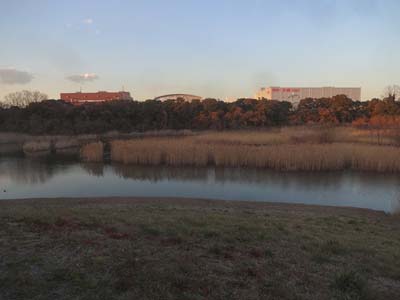
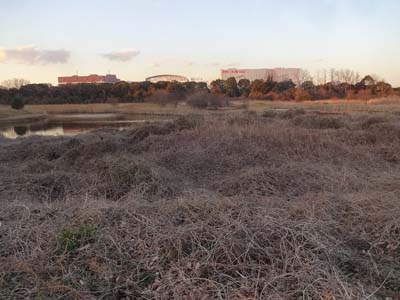
Apart from bird watching, the desolate forest and reed bed in the eastern side of the park area may be impressive for some people! According to what you like, on a calm day in the chilly weather, the park offers the solitude and a solemn moor.
20170216012017021602
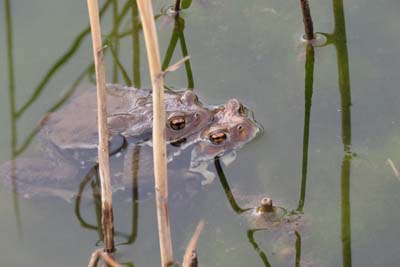
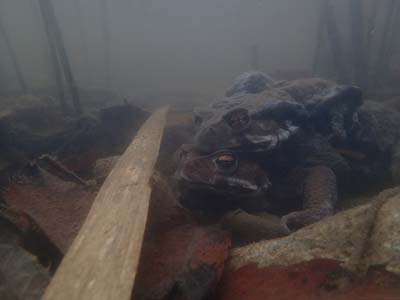
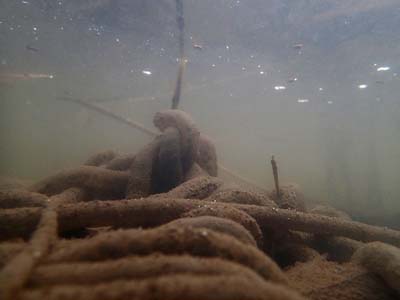
Spring has not come yet, but the Japanese toad (among the four frogs in the park) will come out possibly around the middle of the month as the harbingers of spring. They assemble at the ponds and water pools for mating and spawning. Visitors may observe many males and females in amplexus at the ponds and streams in the western part of the park. There is a hard competition among males to have females known as “Kawazu Gassen = Frog Battle.” If you are not lucky enough to observe Kawazu Gassen you will see plenty of frog egg masses that they left behind in a water. 
201702160320170216042017021605
If you are a resident of Tokyo please come and enjoy the park in February. If you are a foreigner and interested in meeting an English-speaking park ranger it will need to be set up ahead of time, so please email us at yachoukoen@wbsj.org at least one week before your visit.
If you are a foreigner visiting Tokyo, please ask your hotel concierge about the Tokyo Port Wild Bird Park. They will perhaps help you contact us and help you with directions for getting to the park.
We are looking forward to see you!


newyear3

We have opened the newly renovated Nature Center (in Nov 2016) and we hope you will come see it! It is very comfortable for viewing the migratory birds in cold (and hot) weather with areas provided to eat your bento lunch. (We do not have any food vendors on site so you will need to bring your own food.) It is very spacious and a relaxed atmosphere so you can stay as long as you like!

If you are a resident of Tokyo, you will be surprised at how in the middle of Tokyo, there is such a nice refuge for nature. You can enjoy birdwatching quietly without the hustle and bustle of people bumping into you. You can come by yourself to enjoy a little solitude, or bring your family as it is a safe and friendly environment.

If you are a foreigner visiting Tokyo, we are located very close to Haneda airport (a short walk from Ryutsu Center on the monorail line) where you can enjoy seeing a variety of habitats like forests and coastal tidal flats for birdwatching.
newyear


We have many common Japanese birds as residents and migrating to the park so you have a good chance to add lifer birds to your list! We also have rangers available to consult if you are looking for other areas to birdwatch if you are just starting your trip in Japan. If you are interested in meeting an English speaking ranger it will need to be set up ahead of time, so please email us at yachoukoen@wbsj.org at least two weeks before your visit. If you are coming at the last minute, most of the staff can only speak Japanese but whoever is on hand will do their best to answer your questions.

 We look forward to welcoming you to the Bird Park and have a great “Year of the BIRD”(It’s not just for roosters) in 2017!!!

newyear2


The following is the list of species that park rangers observed today.


Eurasian Wigeon、Mallard、Spot-billed Duck、Northern Shoveler、Teal、Common Pochard、Tufted Duck、Little Grebe、Great Cormorant、Grey Heron、Great Egret、Little Egret、Common Moorhen、Eurasian Coot、Common Greenshank、Common Buzzard、Oriental Turtle Dove、Common Kingfisher、Japanese Pygmy Woodpecker、Great Spotted Woodpecker、Bull-headed Shrike、Large-billed Crow、Japanese Tit、Brown-eared Bulbul、Japanese White-eye、White-cheeked Starling、Daurian Redstart、Grey-spotted Flycatcher、Narcissus Flycatcher、Blue-and-white Flycatcher、Eurasian Tree Sparrow、White Wagtail (32species)


Ranger's Activities

Research : Daily Surveys  and  updating records

Habitat management : Patrol

Education : Providing visiter services at the Ranger Station

Other : Nothing to Report

Notice

Nature Center : Under renovation (No Entry)


Exciting Migration Season at the Bird Park!


As the weather cools and you hear therustle of the leaves – and sniffles and sneezing in the train, you know it ishere! The Autumn Migration Season!!!

Visitation by humans has increased sincethe arrival of our migratory birds – starting in early September, we had thearrival of Green winged Teal, Northern Pintails and Shovelers, then the Mallards.This month the Eurasian Widgeons, Greater Scaup, Common Pochards arrived on thesame day on Oct 7, then 5 days later the Gadwalls arrived. As the park’sfreshwater and saltwater ponds are starting to fill with the regular returning winteringresidents, the open field areas also are seeing a large number of photographerswith their huge camera lenses. They are looking for the flashy coloredflycatchers! We have seen the Eastern crowned warbler, a female blue and whiteflycatcher, and an Eye-browed Thrush this month as well as a beautiful pair ofMandarin Ducks on Oct 15! A rare (for the park) sighting of a green pigeon wasseen by rangers that one day on Oct 12.


Birds heading south for the winter look forthese precious stopover points –a green paradise full of bugs and high-energysnacks a real “Rest Area” for the birds- amidst the aerial highway of tallskyscrapers in Metropolitan Tokyo. We have seen more than a few flycatchersstopping in for short stop along their long migration route.


It is a mutual love for each other – thebirds love the park and the photographers love the colorful birds like theDurian Redstart, Jyobitaki.

IMG_0115
 

Also the Ezobitaki or Grey spottedflycatcher.

IMG_0614_1


And Kibitaki or Narcissus flycatcher.

IMG_0149

Very uncommon migrants, which can only beseen a handful of times if in a good year, is the Eurasian wryneck or Arisui.This year a pair of them were easily seen from the observation blind at theeastern freshwater pond.

The following is the list of species that park rangers observed today.

Spot-billed Duck、Common Pochard、Tufted Duck、Little Grebe、Great Cormorant、Grey Heron、Great Egret、Little Egret、Little Ringed Plover、Common Sandpiper、Little Tern、Oriental Turtle Dove、House Swift、Common Kingfisher、Japanese Pygmy Woodpecker、Large-billed Crow、Japanese Tit、Barn Swallow、Asian House Martin、Brown-eared Bulbul、Japanese White-eye、Oriental Reed Warbler、White-cheeked Starling、Eurasian Tree Sparrow、Oriental Greenfinch (25species)


Ranger's Activities

Research : Daily Surveys  and  updating records

Habitat management : Trail maintemance

Education : Providing visiter services at the Ranger Station、Environmental education program for Elementary school children

Other : Monthly Rangers Meeting


Notice

Nature Center : Under renovation (No Entry)


THE RAIN PASSED, AND OUT CAME THE SUN!


Today until around 3PM there was a light rain and heavy clouds. But suddenly the skies cleared up and out came the sun! There were many happy birds calling out! The Great Reed Warbler (Ooyoshikiri) was sitting atop the willow tree with his course voice and bright red color inside its mouth was noticeable. The Brown Eared Bulbuls (Hiyodori) were also doing the regular screaming in the background and enjoying flying around the treetops of the East Freshwater pond. There the rangers enjoyed being able to interact with some special foreign visitors from Kent who are members of Europe’s Royal Society for the Protection of Birds (RSPV). They enjoyed seeing the Spot Billed Ducks for the first time! As the juveniles are coming out more, the birders could get some clarification on some of the birds they saw at the park since the coloration was varying. 

The rocky banks of the Brackish Water Pond also had a familiar visitor returning, the Common Sandpiper (Isoshigi). This hard-to-see visitor is the same color as the rocks it was weaving thru as it was hunting for food along the far edge of the shoreline. Where had it gone to for the past month? The last sighting of the sandpiper was May 25th according to the Park’s records. The Rangers were happy to view it in the spotting scope and get photos (posted on the Japanese blog as well http://wbsj-wildbirdpark.blog.jp/). The experienced rangers could easily point out the bird as it kept on the move, but inexperienced birders just had to rely on the scope being pointed in the right direction.

The Tufted Duck (Kinkurohajiro) has been overstaying his seasonal migration so for this season, and for the area, is a bit unusual. Usually the Tufted Ducks come in Oct-Nov for the winter and leave by April and longer staying ones leave by May at the latest. This one lone duck is a nice bonus for our foreign visitors who may not have seen this bird before.

In the rainy season, it is worth making the effort to get out and explore even if it is raining in the morning because you never know when the clouds will part, and what little beautiful flying surprises are in store for you! 


IMG_0141_1

Today is World Ocean’s Day so spending the day at the Park to see the birds enjoying the Tidal Areas is only so fitting! The rainy season started a couple of days ago, so luckily it was also a very warm, sunny day!

Touching the coastlines of the Tokyo, Kanagawa, and Chiba Prefectures, the Tokyo Bay is a vital part of Tokyo’s economic structure, and has a big effect on the climate of Tokyo as well. As a major port to the world, Tokyo Bay also used to be known as Edo Bay until the late 1800’s. The Bird Park is the closest park to the Haneda International Airport, so not only is it a great pit stop for the migrating birds, it can also serve as a refreshing stop for foreign visitors as well! However, this time of year it is pretty quiet around the Park as we enter into the rainy season.


Today, a few Grebes (Tachybaptus ruficollis) were having territorial displays as the youngsters have left
the nest and must start making their own way. In the East Freshwater Pond, during the low tide, about 6 Grey Herons (Ardea cinera) could be seen at once. They seemed to be getting along more peacefully.


A Great Egret (Aldea alba) put on a beautiful display of feathers as it was cleaning and I was able to capture it by digiscoping (taking a photo on my smartphone using the scope)


Hopefully our visitors can get a greater appreciation for nature and for the ocean by visiting these kinds of parks around Tokyo!

Egret


以上の内容はhttps://wildbirdpark.blog.jp/archives/cat_362507.htmlより取得しました。
このページはhttp://font.textar.tv/のウェブフォントを使用してます

不具合報告/要望等はこちらへお願いします。
モバイルやる夫Viewer Ver0.14