今日の「気になる語法」は reverse。
まず、次のニュース投稿を見て下さい。
Gut Fungus Shows Promise in Reversing MASH in Mice
Research utilizing a filamentous fungus in the gut microbiome may provide a new strategy for treating MASH. The study was led by Shuang Zhou, PhD, and colleagues at @PKU1898.Gut Fungus Shows Promise in Reversing MASH in Mice
— Genetic Engineering & Biotechnology News (@GENbio) 2025年5月2日
Research utilizing a filamentous fungus in the gut microbiome may provide a new strategy for treating MASH. The study was led by Shuang Zhou, PhD, and colleagues at @PKU1898. #gut #microbiomehttps://t.co/VoyBu0ZR98
腸内真菌がマウスのMASHを逆転させる可能性を示す
腸内細菌叢に生息する糸状菌を用いた研究は、MASHの新たな治療法となる可能性があります。この研究は、@PKU1898のShuang Zhou 博士らによって主導されました。
Google翻訳では「逆転させる」となっている動詞のreverseに注目。
私の「英語ニュース引用RT140字紹介&詳解」では、次のような投稿でした。
fungus「菌類」は不可算もあり
promise「有望であること; 可能性」は通例不可算。cf. a man of great promise 「将来有望な男」
reverse「回復に向かわせる」
MASH= Metabolic Dysfunction-Associated Steatohepatitis(非アルコール性脂肪性肝炎)
以前の呼称はNASH= nonalcoholic steatohepatitis。fungus「菌類」は不可算もあり
— Takashi “即時停戦” Matsui (@tmrowing) 2025年5月2日
promise「有望であること; 可能性」は通例不可算。cf. a man of great promise 「将来有望な男」
reverse「回復に向かわせる」
MASH= Metabolic Dysfunction-Associated Steatohepatitis(非アルコール性脂肪性肝炎)
以前の呼称はNASH= nonalcoholic steatohepatitis。 https://t.co/ZrTXI9Xo6L
まず、MASHについていけていなかったので調べました。
面倒でもツイッターにお立ち寄り下さい。
現代の医学用語についていくのは大変だね。
MASHとNASH界隈。
スタンフォードの解説が簡明。
辞書は
研究社和英大
大辞林
大辞泉
リーダーズ
から。
研究社和英大と国語辞典も頑張っているけど、NASHまで。
MASHは「米陸軍移動外科病院」の意味と、あの昔のTVドラマのタイトルしか載っていない。現代の医学用語についていくのは大変だね。
— Takashi “即時停戦” Matsui (@tmrowing) 2025年5月2日
MASHとNASH界隈。
スタンフォードの解説が簡明。
辞書は
研究社和英大
大辞林
大辞泉
リーダーズ
から。
研究社和英大と国語辞典も頑張っているけど、NASHまで。
MASHは「米陸軍移動外科病院」の意味と、あの昔のTVドラマのタイトルしか載っていない。 https://t.co/D2shTyXKVy pic.twitter.com/amPsqfsKSr
本題のreverseに戻ります。
このreverse はニュースでも近年見聞きする頻度が増えました。
「逆転する」とか「向きを反対にする」ということで、「病状の進行・悪化」に関わって使う場合でも、目的語にprogressionとかgrowthとかではなく、reverse the diseaseのように病名のみを目的語にとるような使われ方は比較的新しいものという印象です。
OALDでは少なくとも、第9版ではこの用例が収録されていて、類語辞典でも同じ用例がありますが、最近の英英和では「訳語」も文脈に合わせた自然なものが選ばれています。
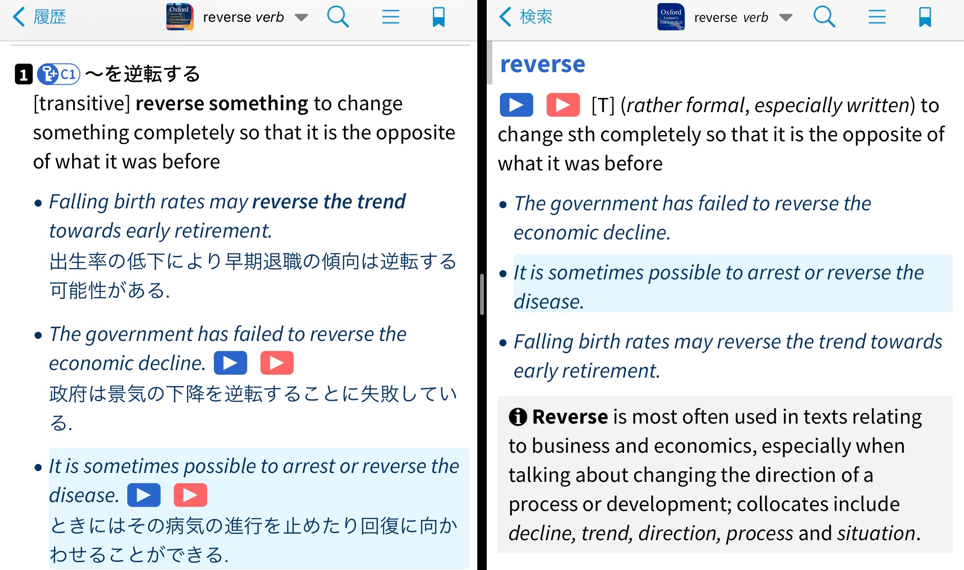
このreverseの使われ方がもやもやするのは、その定義がまだまだ実体/実態に追いついていないからかもしれません。
例えば、
- 「判断・結論を下す」
という行為の逆、それ以前の状態に変える、といえば、当然
- 「判断・結論を下す前の状態に戻す」
のですから、「未定」の状態だな、という理解ができるでしょう。
でも、「病気」で、その「容態の変化の過程・推移」が一緒に明示されない場合は、読み手・聞き手の方で「病状」に置き換え、さらには「その病気全体における現時点の病状の段階」というようなものを補って「それ以前の状態」を解釈する必要が出てきます。
英英辞書の定義でreverseを見てみましょう。
[transitive] reverse something
to change something completely so that it is the opposite of what it was before (OALD)
この定義文をKagi訳すると
- 何かを、それまでの状態とは正反対に完全に変えること
となります。漠然としていますね。
[transitive] to change something, such as a decision, judgment, or process so that it is the opposite of what it was before (LDOCE)
LDOCEの定義では、processが入っているので少し解像度が上がった気がしますが、それでもKagi訳では、
- (決定・判断・プロセスなどを)以前とは正反対の状態に変えること
となります。
to change the direction, order, position, result, etc. of something to its opposite (Cambridge)
このCambridge の定義では、resultが悩ましいですね。Kagi訳だと
- (物事の)方向・順序・位置・結果などを逆にすること。
となります。
Cambridge では、Extra Examplesで次の例を見つけることができます。和訳は便宜上つけました。
They claim the product can reverse the signs of ageing.
その製品は加齢の兆候を逆にする効果があるとうたっています。
この使われ方の何が「もやもや」するかというと、「加齢の兆候を逆にする」や「加齢の印を打ち消す」などという和訳からは、「元に戻す」とか「なかったことにする」などの「可逆的変化」を示す訳語につながらないというところ。
個人的には
to turn a decision, judgment, process, etc., back to a prior state, effectively cancelling it or making it as if it never happened.
というような定義にしないと、今回取り上げた「病状」の文脈には適さないと思うのです。
そうして初めて、processやgrowthなどを目的語とするreverseの意味が整合するものでしょう。
癌などで言われる、「ステージ」でたとえるなら、
- 「ステージ2からステージ3へ」と進行=悪化していたものが、逆行し「ステージ2」に変化すること
で「改善」と呼べるわけです。
2025年5月6日追記;
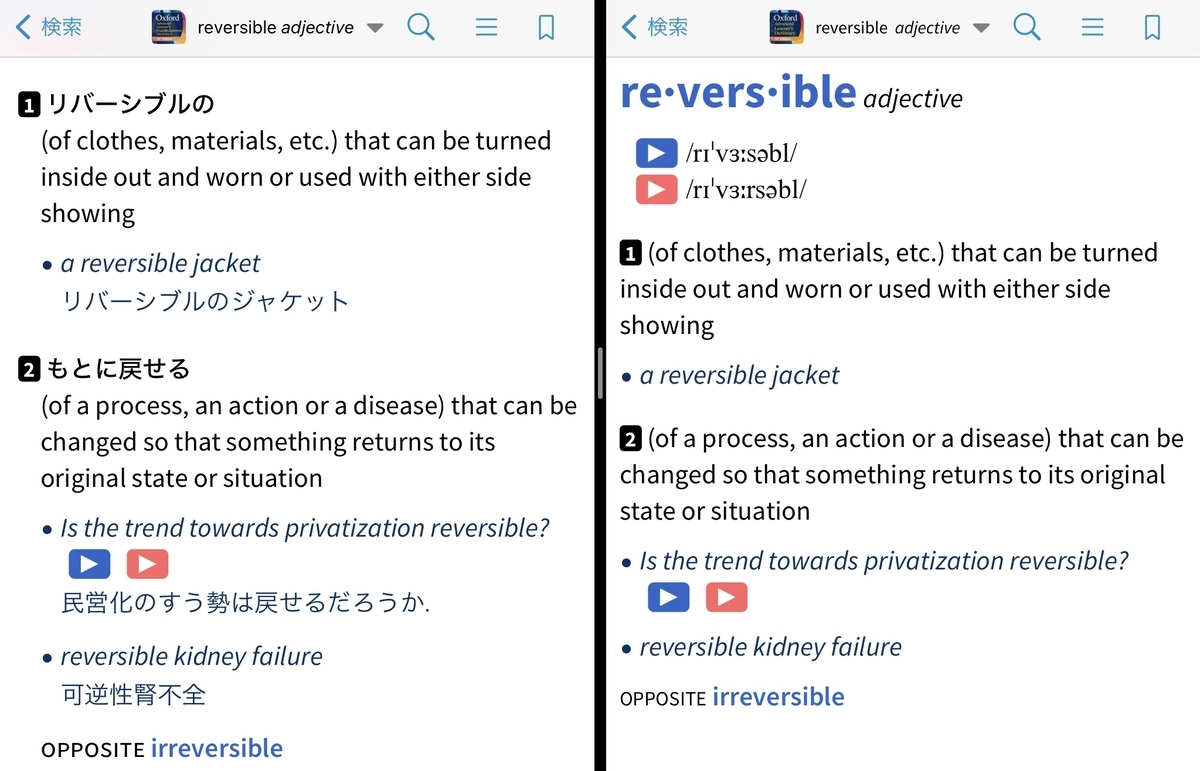
この「可逆性」を反映した定義は、reverseの派生語reversibleではもう少し明示的です。
OALDを英英和との見開き二画面で。
それでもまだ “original” というところでもやもやしますよね?
「病気」に関して言えば、「元の状態」っていうのは「病気になる前、悪くなる前の健康な状態」ですから。「その間の過程・局面・ステージを戻る」ことを表すには「悪くなる前」のグラデーションで「そんなに悪くなる前」が記述描写できないとしっくりこないと思うわけです。
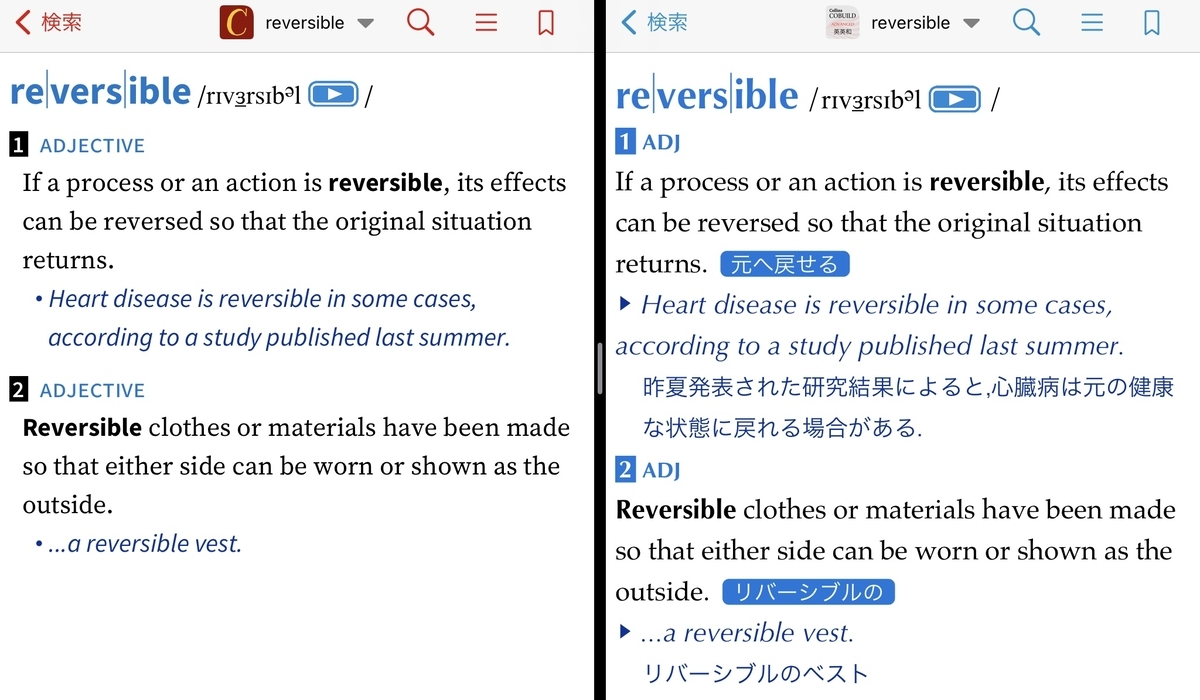
COBUILDの英英和は改訂版で、このreversibleを見出し語から外しましたね(米語第3版にはまだあるので、どういう判断なんだろうか?)
このreversibleくらいの定義文の解像度で、動詞reverseも書き直して欲しいところ。
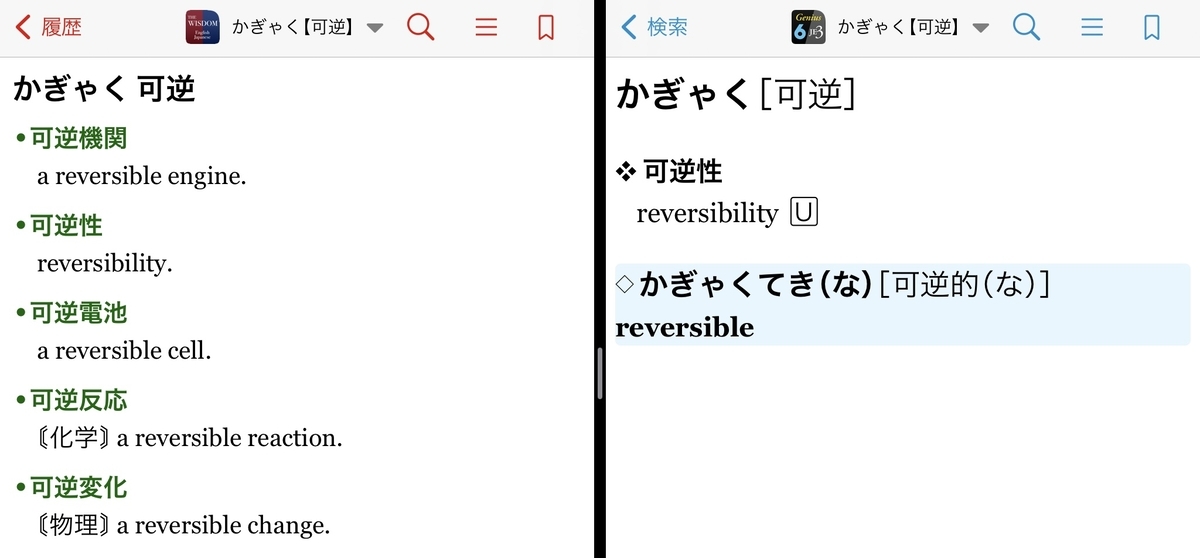
英和・和英でも「可逆」はあれども、「可逆的(な)」は少ないんですよね。
英語ニュースの実例から reverse cancer growth の例。
A common pinworm medication may stop and reverse cancer growth in Merkel cell carcinoma, an aggressive form of skin cancer, according to research led by @UAZCancer researchers and published in the Journal of Clinical Investigation.
A common pinworm medication may stop and reverse cancer growth in Merkel cell carcinoma, an aggressive form of skin cancer, according to research led by @UAZCancer researchers and published in the Journal of Clinical Investigation. More: https://t.co/jydB1HP2kn pic.twitter.com/TsOSS3x91d
— University of Arizona Health Sciences (@UAZHealth) 2025年4月18日
@UAZCancer研究者らが主導し、Journal of Clinical Investigation誌に掲載された研究によると、一般的な蟯虫治療薬が、皮膚がんの中でも悪性度の高いメルケル細胞がんの増殖を抑制し、改善させる可能性があるという。
ここでの何がどのように逆・反対なのか、ということですが、「癌が増殖する悪化の方向とは反対(=悪くなる前」の改善方向に変化させる)」という意味が整合します。
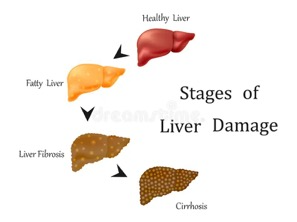
次のツイートについている画像などは良い補助線を引いてくれるように思います。
A patient just told me: "I stopped drinking after you showed me the pictures of a liver with fibrosis and cirrhosis. I understood my condition".
I feel that is didactic to show such images, and tell them that there is hope to stop/reverse the disease.A patient just told me: "I stopped drinking after you showed me the pictures of a liver with fibrosis and cirrhosis. I understood my condition".
— Ramon Bataller (@rabataller) 2024年4月18日
I feel that is didactic to show such images, and tell them that there is hope to stop/reverse the disease.#livertwitter #MedTwitter pic.twitter.com/vWQDoAamas
患者さんが私にこう言いました。「線維化と肝硬変を起こした肝臓の写真を見せてもらってから、お酒をやめました。自分の状態が分かりました」。こうした画像を見せて、病気を止めたり、治したりする希望があることを伝えるのは教訓的だと感じます。
次のツイートは動画付き。
A landmark Australian study is using exercise to help reverse dementia but finding the perfect program to keep the brain healthy is proving a long and difficult process.
A landmark Australian study is using exercise to help reverse dementia but finding the perfect program to keep the brain healthy is proving a long and difficult process. #7News pic.twitter.com/SnyC8yFbja
— 7NEWS Adelaide (@7NewsAdelaide) 2017年12月18日
オーストラリアの画期的な研究では、運動を利用して認知症の改善を図っていますが、脳を健康に保つための最適なプログラムを見つけるのは、長く困難なプロセスであることが判明しています。
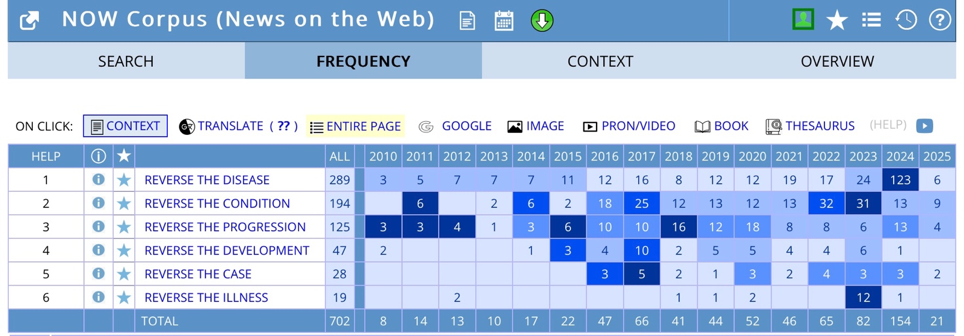
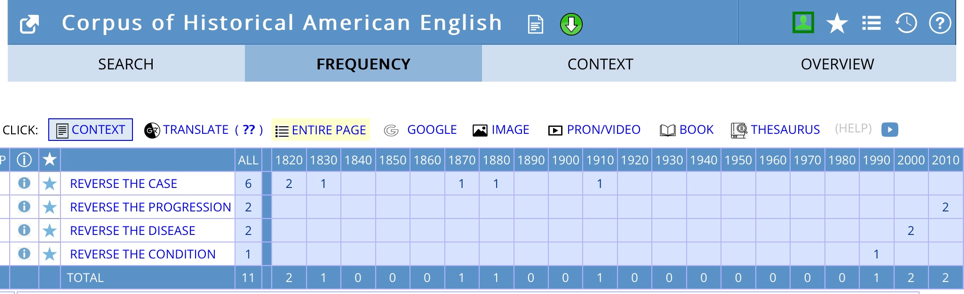
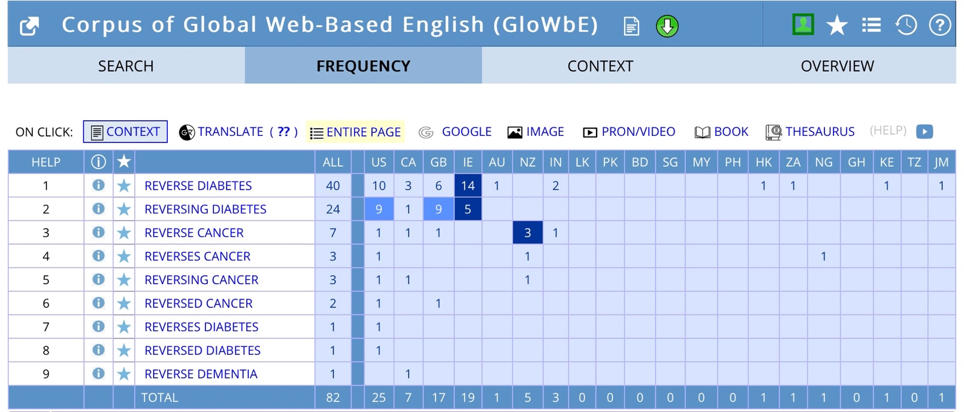
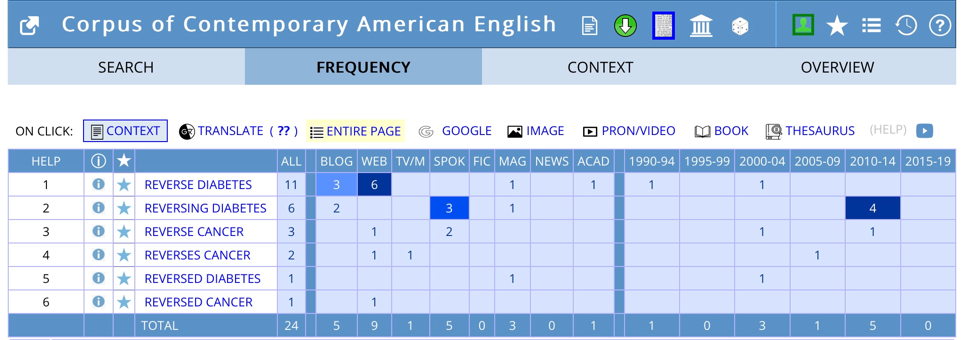
それでは、オンラインコーパスの検索でreverseの使用実態の変化を見てみましょう。
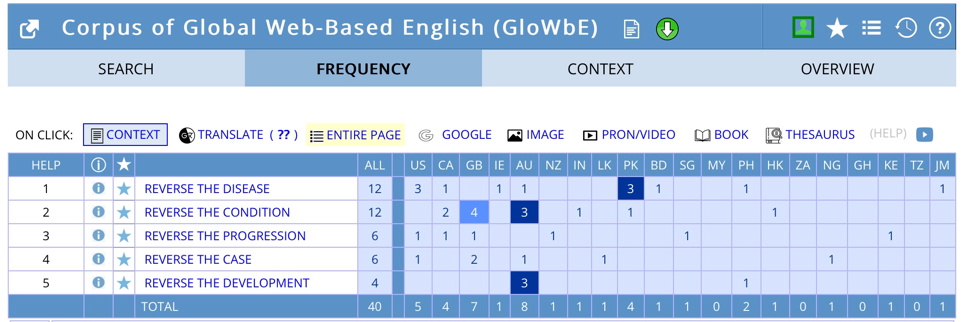
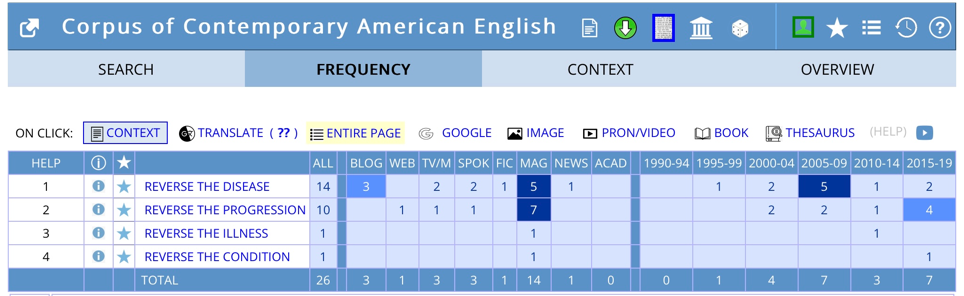
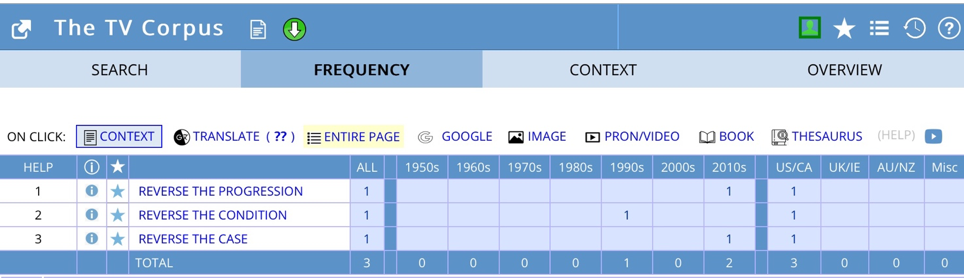
まずはざっくりと病状界隈の名詞で検索。
定冠詞付きで
disease
illness
condition
case
progression
development
での類語の比較で検索。caseが多義なのでノイズが増えますね。
NOW
GLOWBE
COCA
COHA
TV
病名の上位で比較。
糖尿病
癌
認知症
NOW
GLOWBE
COCA
COHA
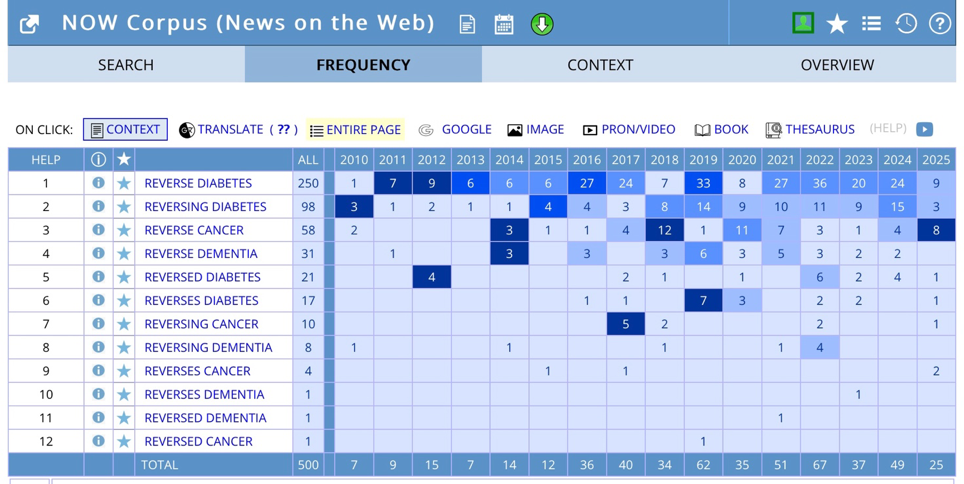
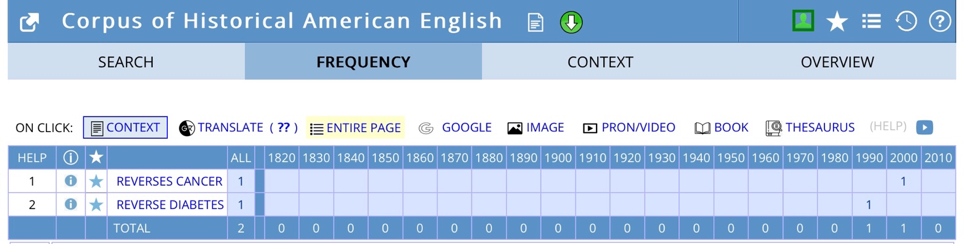
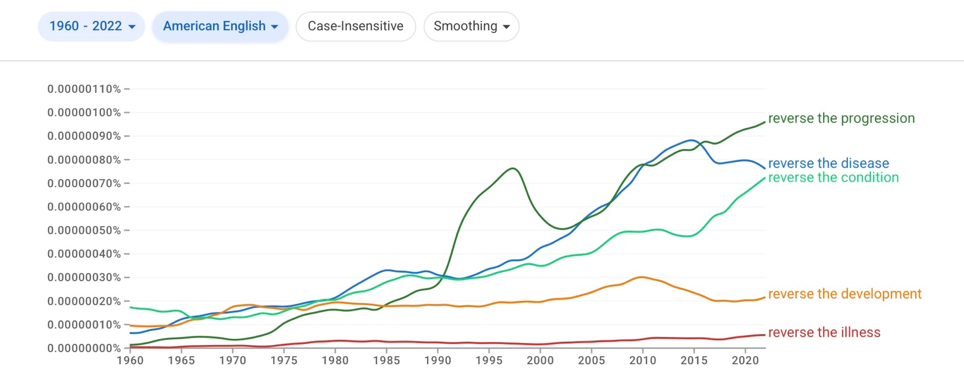
Ngram Viewerでもざっくりと。
全体
米
英
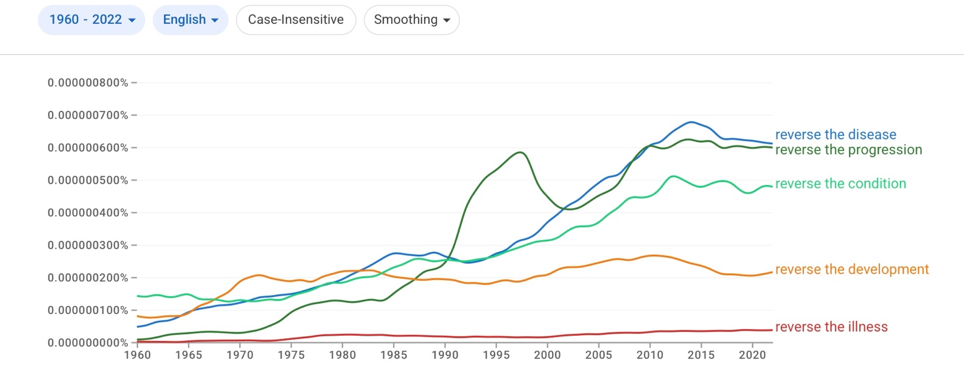
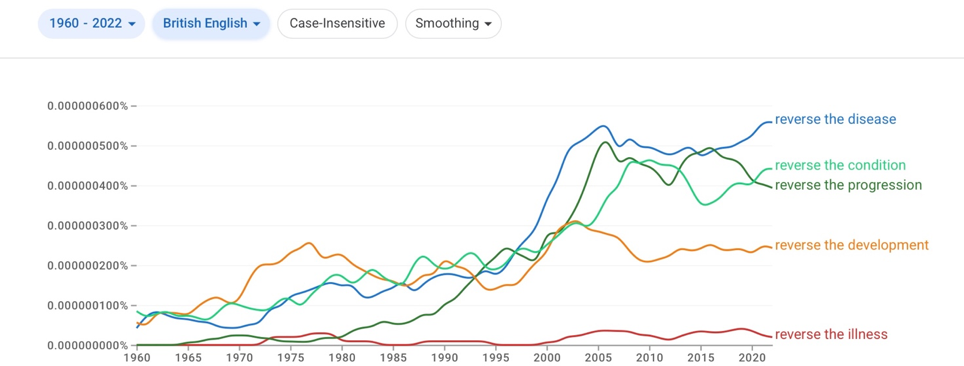
私がツイートで書いていた「近年見聞きする頻度が増えました」という印象が裏付けられた、とは思いますが、まだまだ辞書の定義文の記述も不十分で、用例収録も実態に追いついていないので、関係者におかれましてはよろしくお願いします、と言っておきます。
本日はこの辺で。
本日のBGM: ノイズキャンセリング (木村カエラ)
250526追記:
reverseが「回復へと向かわせる」意味で用いられている例を追加。reverseの類例。
先行文脈の reduce cognitive declineを受けてのreverseを丁寧に。
declineの傾きが症状・容態の進行・悪化のスピード。傾きを減らす=進行を遅らせる、と捉え直せばreverseは進行の逆=逆行、つまりは「回復へと向かわせる」ということがわかるでしょう。reverseの類例。
— Takashi “即時停戦” Matsui (@tmrowing) 2025年5月26日
先行文脈の reduce cognitive declineを受けてのreverseを丁寧に。
declineの傾きが症状・容態の進行・悪化のスピード。傾きを減らす=進行を遅らせる、と捉え直せばreverseは進行の逆=逆行、つまりは「回復へと向かわせる」ということがわかるでしょう。https://t.co/PEUrP6NqiQ
元記事はこちら。
A declining ability to detect scents is linked to conditions including Parkinson’s and Alzheimer’s. But restoring our most neglected sense might not only reduce cognitive decline – studies also show it could even reverse it
A declining ability to detect scents is linked to conditions including Parkinson’s and Alzheimer’s. But restoring our most neglected sense might not only reduce cognitive decline – studies also show it could even reverse ithttps://t.co/xjHt1Z4Wzn
— New Scientist (@newscientist) 2025年5月25日
嗅覚の低下は、パーキンソン病やアルツハイマー病などの疾患と関連しています。しかし、最も軽視されている感覚を回復させることは、認知機能の低下を軽減するだけでなく、研究によると回復させる可能性もあることが示されています。
