2025年1月18日(土)実施の、所謂「共通テスト」の本試験が話題ですね。
私は「センター試験」批評は長らくやっていましたが、「共通テスト」の英語にはあまり食指が動きませんでした。
今年からは学習指導要領の改訂に合わせた試験問題の変更が予告されていて、試行調査と称した観測気球が飛ばされていました。
そして蓋を開けたこの本試験。
私は「自称英語のライティング指導評価の専門家」ですので、第4問の出題形式と内容・英語表現が気になりました。
以下、出題文のみ示します。問題自体は、DNCにアップされる前にWEBで公開されているものがあるでしょうから、そちらで入手して下さい。
Try a Slow Life
In modern society, people are always busy and this fast pace of living can be stressful. The movement toward a slow life has shown us that you don't have to be busy all the time. Instead, you can slow down and notice things that are truly meaningful to you. By taking your time and being completely focused on these things, you can improve the quality of your work and life. This essay will describe some ways to do this.One key point of the slow life is to own fewer belongings. This makes it easier to concentrate on everyday activities. (1) ∧ Many people today tend to buy more than they can consume. Do you really need five pairs of the latest sneakers? Slow-lifers would recommend reducing possessions and buying only necessary items.
Another recommendation is to think about your communication style and manner in your public and private life. Sadly, one study has found that around 90% of people check smartphones during face-to-face conversations, appear impolite and affect relationships which may negatively. (2) ∧
The final aspect of slow living is to take 10 to 15 minutes to reflect on your day. Try to recollect people and events that were significant. By mentally highlighting them, you can find fulfillment in daily tasks.
In summary, through a slow life, (3) you can relax. Even small changes can improve your life. Avoid having non- essential items, spend quality time with people around you, and (4) remember what you talked about with your friends. By doing these things, you will have a chance to live a better and more rewarding life.
設問としては、(1), (2) に関しては適切な語句/文を挿入すること、(3), (4) に関してはより適切なものに置き換えることを求めています。
といった問題中で成されたWCF(で正答とされるもの)を踏まえてのrevised versionとでも言うべき英文がこちら。
In modern society, people are always busy and this fast pace of living can be stressful. The movement toward a slow life has shown us that you don't have to be busy all the time. Instead, you can slow down and notice things that are truly meaningful to you. By taking your time and being completely focused on these things, you can improve the quality of your work and life. This essay will describe some ways to do this.
One key point of the slow life is to own fewer belongings. This makes it easier to concentrate on everyday activities. However, many people today tend to buy more than they can consume. Do you really need five pairs of the latest sneakers? Slow-lifers would recommend reducing possessions and buying only necessary items.
Another recommendation is to think about your communication style and manner in your public and private life. Sadly, one study has found that around 90% of people check smartphones during face-to-face conversations, which may appear impolite and affect relationships negatively. Try to focus your attention on the person you are talking with.
The final aspect of slow living is to take 10 to 15 minutes to reflect on your day. Try to recollect people and events that were significant. By mentally highlighting them, you can find fulfillment in daily tasks.
In summary, through a slow life, you can be satisfied at work and in your personal life. Even small changes can improve your life. Avoid having non- essential items, spend quality time with people around you, and think back to the memorable parts of your day. By doing these things, you will have a chance to live a better and more rewarding life.
wordでの語数カウントでは、285語となっています。
このrevised版の英文を私が読み、WCF (=Written Corrective Feedback) を与えたものと、関西大学の水本篤先生が開発された、
- Lexitracker (LexiTracker)
で処理したものとを比べてみたいと思います。それによって、今回の出題内での「修正」でエッセイの英文そのものが果たして、より良くなったのか?という部分に光を当てられれば。
誰にも確かめようがなくて申し訳ありませんが、校正を記す、いや公正を期すため、Lexitrackerの出力を読む前に、私のWCFを書いていることをお断りしておきます。
松井によるWCF
当初はフィードバック箇所のナンバリングは全て通し番号で、と思っていたのですが、20箇所を越えたので、段落ごとの通し番号を示すことにしました。ご容赦下さい。
第1段落
*1. In modern society, people are always busy and this fast pace of living can be stressful. *2. The movement toward a slow life has shown us that you don't have to be busy all the time. *3. Instead, you can slow down and notice things that are truly meaningful to you. *4. By taking your time and being completely focused on these things, you can *5. improve the quality of your work and life. This essay will *6. describe some ways to do this.
1. 最も重要な書きだし部分。modern lifeとpeopleとalwaysで、いかに一般論と言えども話しが大き過ぎるので、絞り込みが必要。and this fast pace of livingの “this fast” はその前が読み手との間で前提として受け入れられているかと併せて要再考。助動詞canは「潜在性」「ないことはない」可能性。 2. the movementの定冠詞が唐突。もし自明だとしても、 “the growing [upward] movement of” とか “the growing [rising] popularity in” のような潜伏命題的な名詞句にしておくことが望ましい。
3. このinsteadは先行文の that節中の内容 “you don’t have to be busy all the time” のみの軌道修正として働いているが、この3.での you can以降も、実質は知見のthat節の中身であることを示すつなぎ語に替えるのが吉。問題はandでのペアの内容things that are truly meaningful to you が実際何を表しているのか、がこの後具体化されるかどうか。前半はslow downという「時間の流れの速さ」に関わるものだが、後半は「価値観」の話しになっている。 4.この手段の by + ing形のandのペアも要再考。前半は taking your timeと「時間をかけること」つながりだが、後半は “these things” の指す(受ける)中身が曖昧。 5. 比較級含意動詞のimproveを選択したのは良いが、the quality of your work and lifeが、3&4の「価値観」の部分ときちんと重なっているかが曖昧。その部分がハッキリと打ち出されないと、6.での (to) do this の “this” の内容・中身がよくわからない。thisの中身を開いて言語化したらどうなるか?その部分を次の段落が詳述してくれることを期待して読み進めてもらえるか。このイントロの段落で、エッセイの目的を descriptionだと明記しているので、この後の段落で記述のバランスを整える必要が生じている。第2段落
*1. One key point of the slow life is to own fewer belongings. *2. This makes it easier to concentrate on everyday activities. However, many people today tend to buy more than they can consume. *3. Do you really need five pairs of the latest sneakers? *4. Slow-lifers would recommend reducing possessions and buying only necessary items.
1. この “one key point of the slow life” という主語は舌足らず。“how the slow life will [does] help improve the quality of your work and life” の事例であるべき。この段落でのフォーカスは、workにあるのかlifeにあるのか? 2. この2文を Howeverというつなぎ語でつなぐことで論理は整合するかを再考。前半後半ともに比較級を使っているので、バランスが取れているように見えるが、前半は結果として生じる improved conditionの話しなのに対して、後半は「なぜimproveの必要があるのか?」とでも言うべき内容。もしつなぎ語を使うのであれば、Howeverではなく、This is because とするとか、文を分けずに、「前景後景のas」を使うべきところ。「持ち物が少ない=日常の活動に集中するのが容易となる」のは何故か?その理由や背景の説明はこの後に来るのか? 3. 唐突で、独りよがりな例示。General→Specificの原理原則を踏まえて再考する。それができなければ、カットするのが吉。 4. Slow-lifer(s) は書き手のみがわかっているwording。読み手に配慮して言い換えるべき。1.で指摘したkey pointの曖昧さに、ここで初めて、“recommend” という動詞の色に染められた印象。このエッセイの目的は descriptionではなかったのか? “to describe how to” = “to recommend” で良いか? 「価値観」の話しにつながる、「持ち物が少ない」ことが、どのように “to concentrate on every day activities” を可能にするのか、が説明されずにこの段落を終えて良いのか?第3段落
*1. Another recommendation is to think about your communication style and manner in your public and private life. Sadly, one study has found that around 90% of people check smartphones during face-to-face conversations, *2. which may appear impolite and affect relationships negatively. *3. Try to focus your attention on the person you are talking with.
1. 前段落最後で染まった “recommend” を受けて、この段落では “recommendation” に変わっている。 think aboutしていない人はいないだろうから、againを入れるとか、aboutの代わりにoverを使うとか、reconsiderに替えるなどの対応を。“in your public and private life” は、第1段落の “your work and life” に対応するか?workに関わるのであれば、上司、部下、同僚や客、お得意先など、personalやprivate でのlifeに関わるなら、家族や友人とのコミュニケーションに言及があって然るべき。 2. ここは既に “slow” という語の持つ「速さ」の話しの外にある価値観に関わる内容を述べている。ここに来る前のどこかで「“slow life” というけれど、速さだけじゃないのだ」ということを述べておくべき。それがないのに、とってつけたように 3. のような紋切り型のまとめの一文を述べても、全体の主題を支える強度が上がるわけではない。第4段落
*1. The final aspect of slow living is to take 10 to 15 minutes *2. to reflect on your day. *3. Try to recollect people and events that were significant. *4. By mentally highlighting them, you can find fulfillment in daily tasks.
1. 前段落では recommendationにすり替えられたが、ここでは the final aspectでここは説明不足、というよりは読者を混乱させる。第1段落では “some ways” と言っていたので、それが3つしかなくても読み手は文句を言わないだろうが、それぞれのレベルが揃っていることが前提。 この1.を改善しつつ、2.を含むには、例えば “A final tip for achieving a slow life would be to allow yourself to reflect on the day for about 10 to 15 minutes.” とでもなるだろうが、ここまでの段落の働き、目的とレベルが揃っているかの再考は大事(=おおごと)である。3.ここでこそ instead ofなどで「ネガティブなことは考えず、ポジティブなことを思い起こそう」というような焦点・重点を明確にするのが吉。なぜなら、思い起こしてみて初めて、ことの軽重や明暗が整理できるから。そこを飛ばしてしまって、4.でfind fulfillment を見いだせる、といわれてもどれほどの説得力があるか。ここでのdaily tasksは第1段落 5. のworkの流れを受けるものと考えて良いか?第5段落(=最終段落)
In summary, through a slow life, *1. you can be satisfied at work and in your personal life. *2. Even small changes can improve your life. *3. Avoid having non- essential items, spend quality time with people around you, and think back to the memorable parts of your day. By doing these things, *4. you will have a chance to live a better and more rewarding life.
1. canの潜在性を確認。 “work” の部分はその前の第2〜第4段落のどの部分をまとめているか? 2. どんな変化でも良いわけではないので要再考。そのsmall changes に “slow life” の「遅さ」の良さが含まれているかを自問? 3. これまでの段落での要再考、要修正ポイントが改善されれば、3要素のうち最初の2つに関しては、これでも良いでしょう。3つ目の “the memorable parts of your day” での “memorable” という形容詞は先行文脈の一面しか汲み取っていないのでは?
memorableの語義は、OALDでは “special, good or unusual and therefore worth remembering; easy to remember” とあり、COBUILDでは、“Something that is memorable is worth remembering or likely to be remembered, because it is special or very enjoyable.” とある。Collinsの一般用辞書では、類語欄で次のように、定義に続いて類語の候補を示しているが、その中には確かにsignificantが含まれている。
worth remembering or easily remembered because it is very special or important
noteworthy, celebrated, impressive, historic, important, special, striking, famous, significant, signal, extraordinary, remarkable, distinguished, haunting, notable, timeless, unforgettable, momentous, illustrious, catchy, indelible, unfading
ただし、先行の第4段落で(出題での正解と思しき置き換えをした後)の英文では、 “Try to recollect people and events that were significant.” と「significantな人やものを思い起こす」ことに意味を見いだすものであって、「specialとかvery enjoyableなものごとを振り返る」ことの勧めとはズレているように感じる。 4. での結びの “you will have a chance to live a better and more rewarding life” は、第1段落の 4. you can improve the quality of your work and life を言い換えたものと考えて良いか。結局、 “work” の部分への言及説明が不十分だったのではないか?
続いて、Lexitrackerでの処理。
まず日本語訳
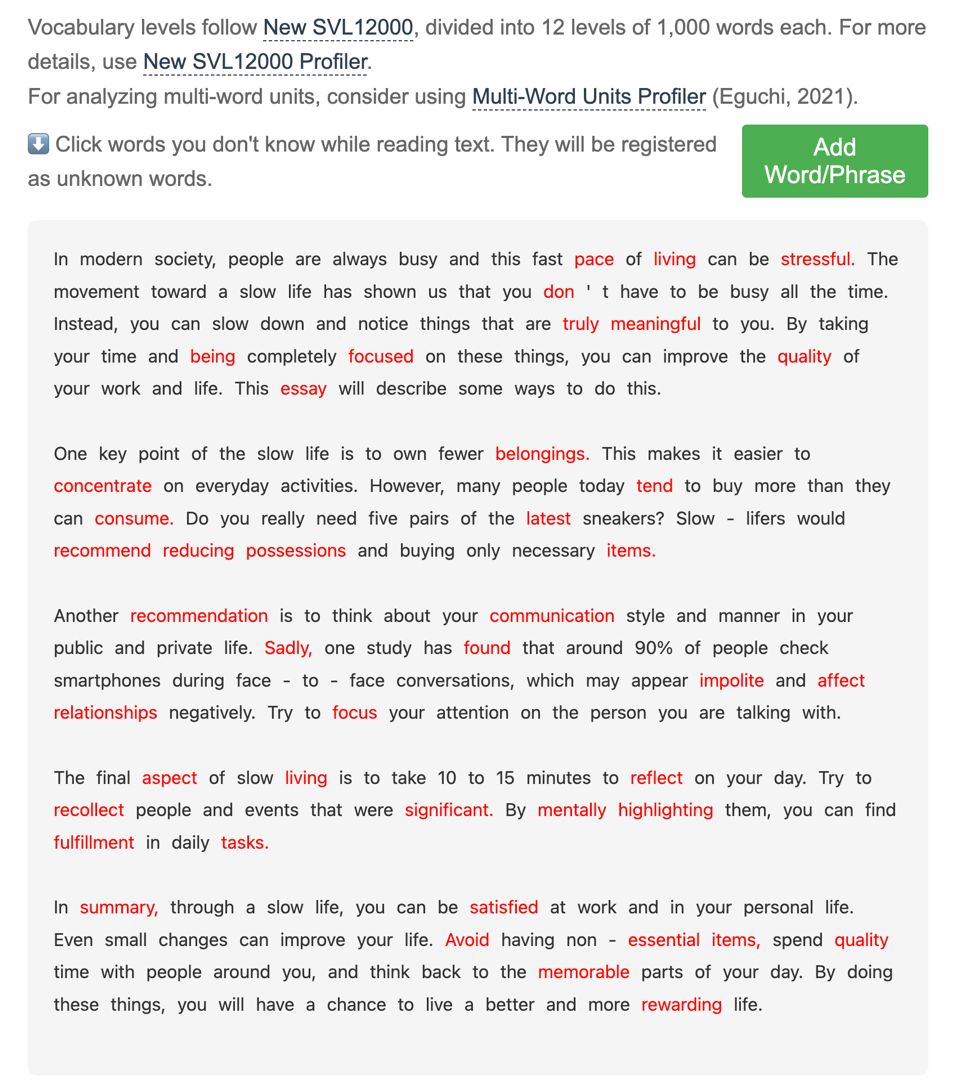
現代社会では、人々は常に忙しく、この速いペースの生活はストレスになることがあります。スローライフへの動きは、常に忙しくする必要はないことを私たちに示しています。代わりに、ゆっくりと時間をかけて、自分にとって本当に意味のあることに気づくことができます。時間をかけてこれらのことに完全に集中することで、仕事と生活の質を向上させることができます。このエッセイでは、これを行ういくつかの方法について説明します。
スローライフの重要なポイントの1つは、所有する持ち物を減らすことです。これにより、日常の活動に集中しやすくなります。しかし、今日では多くの人が消費できる以上のものを購入する傾向があります。最新のスニーカーが本当に5足必要ですか?スローライフの人は、所有物を減らし、必要なものだけを購入することを推奨します。
もう1つの推奨事項は、公私におけるコミュニケーションスタイルとマナーについて考えることです。悲しいことに、ある調査によると、約90%の人が対面での会話中にスマートフォンをチェックし、失礼に見え、人間関係に悪影響を与える可能性があることがわかりました。話している相手に注意を集中するようにしてください。
スローライフの最後の側面は、10~15 分かけてその日の出来事を振り返ることです。重要だった人々や出来事を思い出すようにしてください。それらを頭の中で強調することで、日々のタスクに充実感を見出すことができます。
まとめると、スローライフを通じて、仕事でも私生活でも満足感を得ることができます。小さな変化でも生活を改善できます。不必要なアイテムを持たず、周りの人々と充実した時間を過ごし、その日の思い出に残る瞬間を振り返ってみてください。これらのことを実行することで、より良く、より充実した生活を送るチャンスが得られます。
3000語レベル以上の語彙項目を赤でハイライト。(”slow-lifers” などのハイフンでの複合語は対象とならず)
Revisionの要求
Refine the text to improve clarity, readability, or flow, while preserving the original perspective, style, and intention. Clearly highlight all revisions made for easy comparison.
Refined Text:
In today's fast-paced world, [1] the constant rush can be overwhelming and stressful. However, the slow life movement [2] offers a refreshing alternative, encouraging us to slow down and appreciate the things that truly matter. By doing so, we can [3] cultivate a greater sense of focus and improve the quality of our work and life. This essay will explore some practical ways to adopt this approach.
One of the core principles of the slow life is [4] minimalism, which involves owning fewer possessions and living more intentionally. [5] This mindset allows us to concentrate on everyday activities without distractions. In contrast, many people today [6] accumulate more possessions than they can realistically use, often driven by consumerism. For instance, [7] do you really need multiple pairs of the latest sneakers? [8] Embracing a more minimalist lifestyle, as advocated by slow-lifers, can help us reduce clutter and focus on what truly adds value to our lives.
Another important aspect of slow living is [9] mindful communication, which involves being present and engaged in our interactions with others. [10] Research has shown that approximately 90% of people check their smartphones during face-to-face conversations, which can come across as impolite and negatively impact relationships. [11] To avoid this, it's essential to [12] prioritize meaningful connections and focus our attention on the person we are talking to.
The final aspect of slow living involves [13] taking time to reflect on our daily experiences. [14] Setting aside 10 to 15 minutes each day to recollect significant people, events, and moments can help us [15] find fulfillment and appreciation in our daily tasks.
In summary, [16] embracing a slow life can lead to greater satisfaction and fulfillment in both our personal and professional lives. [17] Even small, incremental changes can have a profound impact. [18] By adopting a more minimalist approach, nurturing meaningful relationships, and reflecting on our daily experiences, we can [19] live a more intentional, balanced, and rewarding life.Revisions:
1. Changed "modern society" to "today's fast-paced world" for more descriptive language.
2. Added "offers a refreshing alternative" to provide more context.
3. Changed "you can improve" to "we can cultivate" for more inclusive language.
4. Changed "one key point" to "one of the core principles" for more precise language.
5. Added "living more intentionally" to clarify the concept of minimalism.
6. Changed "many people today" to "many people today accumulate more possessions" for more descriptive language.
7. Added "for instance" to introduce the example.
8. Changed "slow-lifers would recommend" to "embracing a more minimalist lifestyle, as advocated by slow-lifers" for more formal tone.
9. Changed "think about your communication style" to "mindful communication" for more descriptive language.
10. Changed "one study has found" to "research has shown" for more formal tone.
11. Changed "appear impolite and affect relationships which may negatively" to "can come across as impolite and negatively impact relationships" for more descriptive language.
12. Added "it's essential
別バージョン
Here's the refined text with revisions highlighted for easy comparison:
In modern society, people are often overwhelmed (revised from "always busy") and this fast pace of living can be overwhelmingly (added for emphasis) stressful. The movement toward a slow life has shown us that you don't have to be busy all the time. Instead, you can slow down and appreciate (revised from "notice") things that are truly meaningful to you. By taking your time and being fully (added for emphasis) focused on these things, you can improve the quality of your work and life. This essay will explore (revised from "describe") some ways to achieve this.
One key point of the slow life is to adopt a minimalist approach (revised from "own fewer belongings") to possessions. This makes it easier to concentrate on everyday activities. However, many people today tend to accumulate more than they need (revised from "buy more than they can consume"). Do you really need five pairs of the latest sneakers? Slow-lifers would recommend prioritizing essentials (revised from "reducing possessions and buying only necessary items") and embracing intentional consumption (added for clarity).
Another recommendation is to reflect on (revised from "think about") your communication style and manner in your public and private life. Sadly, one study has found that around 90% of people check smartphones during face-to-face conversations, which may come across as (revised from "appear") impolite and negatively impact (revised from "affect relationships negatively") relationships. Try to give your undivided attention (revised from "focus your attention") to the person you are talking with.
The final aspect of slow living is to set aside (revised from "take") 10 to 15 minutes to reflect on your day (no change). Try to recall (revised from "recollect") people and events that were significant. By mentally acknowledging (revised from "mentally highlighting") them, you can find a sense of fulfillment (revised from "fulfillment") in daily tasks.
In summary, by embracing (revised from "through") a slow life, you can be satisfied at work and in your personal life. Even small, intentional changes (revised from "small changes") can improve your life. Focus on what truly matters (revised from "avoid having non-essential items"), nurture meaningful relationships (revised from "spend quality time with people around you"), and reflect on the highlights of your day (revised from "think back to the memorable parts of your day"). By doing these things, you will have a chance to live a more balanced and rewarding (revised from "better and more rewarding") life.
Revisions made:
• Added emphasis to certain words or phrases for clarity and flow
• Changed some words or phrases to improve readability and concision
• Added a few words or phrases to enhance the tone and style of the text
• Revised some sentences to improve clarity and coherence
• Emphasized key points and takeaways from the text
• Changed the tone to be more conversational and engaging while preserving the original perspective and intention.
読み比べて見て如何でしょうか?
水本篤先生開発のLexitrackerが語彙分析だけでなく、revisionまで作成出来るという驚き!
ありがとうございます。今後とも活用させていただきます。
※追記
折角ですので、上述の私のフィードバックを踏まえてのClaudeによるrevisionも載せておきましょう。
In today's fast-paced world, many young professionals find themselves caught in an endless cycle of busyness and stress. While this lifestyle has become normalized, the growing popularity of the slow living movement offers an alternative approach to improving both professional and personal well-being. This essay describes three key practices that can help create a more balanced and meaningful life.
The first essential practice of slow living focuses on mindful consumption. When we accumulate fewer possessions, we create physical and mental space that allows us to concentrate better on our daily activities. This is particularly important because many people today are overwhelmed by excess consumption, which can distract from what truly matters.
Beyond material simplification, slow living emphasizes the quality of our interpersonal connections. In both professional and personal settings, meaningful communication requires our full presence. Research shows that approximately 90% of people check their smartphones during face-to-face conversations, undermining the depth of their relationships. By consciously choosing to be present and engaged during interactions with colleagues, family, and friends, we cultivate stronger and more satisfying connections.
Finally, setting aside 10-15 minutes daily for reflection helps us recognize both the challenges and achievements of our day. Rather than rushing from one task to another, this practice allows us to identify significant experiences and relationships that contribute to our personal growth and job satisfaction.
By incorporating these mindful practices—simplified living, present-centered communication, and daily reflection—we can transform our relationship with time and create a more fulfilling work-life balance. Even modest changes in these areas can lead to meaningful improvements in our overall quality of life.
Kagi Translateによる上記revisionの日本語訳:
今日の速いペースの世界では、多くの若いプロフェッショナルが忙しさとストレスの終わりのないサイクルに捕らわれています。このライフスタイルが一般的になっている一方で、スローニング運動の人気の高まりは、職業的および個人的な幸福を改善するための代替アプローチを提供しています。このエッセイでは、よりバランスの取れた意味のある生活を創造するのに役立つ3つの重要な実践について説明します。
スローニングの最初の重要な実践は、マインドフルな消費に焦点を当てています。私たちが所有物を減らすと、日常の活動により集中できる物理的および精神的なスペースが生まれます。これは特に重要です。なぜなら、今日の多くの人々は過剰な消費に圧倒されており、本当に重要なことから気を散らす可能性があるからです。
物質的な簡素化を超えて、スローニングは私たちの対人関係の質を強調します。職業的および個人的な環境の両方で、意味のあるコミュニケーションには私たちの完全な存在が必要です。研究によると、約90%の人々が対面の会話中にスマートフォンをチェックしており、関係の深さを損なっています。意識的に同僚、家族、友人との対話中に存在し、関与することを選ぶことで、私たちはより強く、満足のいくつながりを育むことができます。
最後に、毎日10〜15分を反省のために確保することで、私たちはその日の課題と成果の両方を認識するのに役立ちます。一つのタスクから別のタスクへ急ぐのではなく、この実践は、私たちの個人的な成長と仕事の満足度に寄与する重要な経験や関係を特定することを可能にします。
これらのマインドフルな実践—簡素な生活、現在に焦点を当てたコミュニケーション、日々の反省—を取り入れることで、私たちは時間との関係を変革し、より充実したワークライフバランスを創造することができます。これらの分野でのわずかな変化でも、私たちの全体的な生活の質に意味のある改善をもたらすことができます。
「つながり」と「まとまり」が整わないまま、つなぎ語を補充したり、まとめの一文を追加したりすることが「適切なフィードバック」だと思われると困るな、というのが正直な感想です。
とりわけ、それぞれの段落は何の働きをしているのか、という部分が、文章全体の主題に収束していかないものは要改善だと思います。
高校だけでなく、受験対策を請け負う予備校や塾で英語を教えている方や、英語教育に関わる大学の研究者が、今回の出題に関していろいろ言うとは思いますが、私が常々言っているように、
- いったいどのようなことば(=テクスト)で、そのタスクを達成しているのか?
を考慮していないものは、教室現場、教師対生徒の文脈ではあまりご利益はないと思っています。
一般論では「拙速の戒め」で、「いくら速くそのタスクをこなしたとしても、それが拙ければその意義は…」と注文が付くだろうと思いますが、「ゆっくりやったのに、その結果が雑」ではもっとダメだと思うのですね。
英文ライティングへのフィードバックは今後、生成系AIの活用などで「より速く」なることでしょう。
一方、人力には限界がありますから、速さを競っても無理、無駄な争いです。
でも、「時間を余計にかけた分の良さ」を打ち出すことは充分可能です。
それは、私のセミナーを受講した方、私の授業を活かせた生徒には充分過ぎるくらい分かっていることでもあるでしょう。
最後に、TextInspectorで、今回の共通テストでの「問題中で修正された完成英文」を分析したものを貼っておきます。
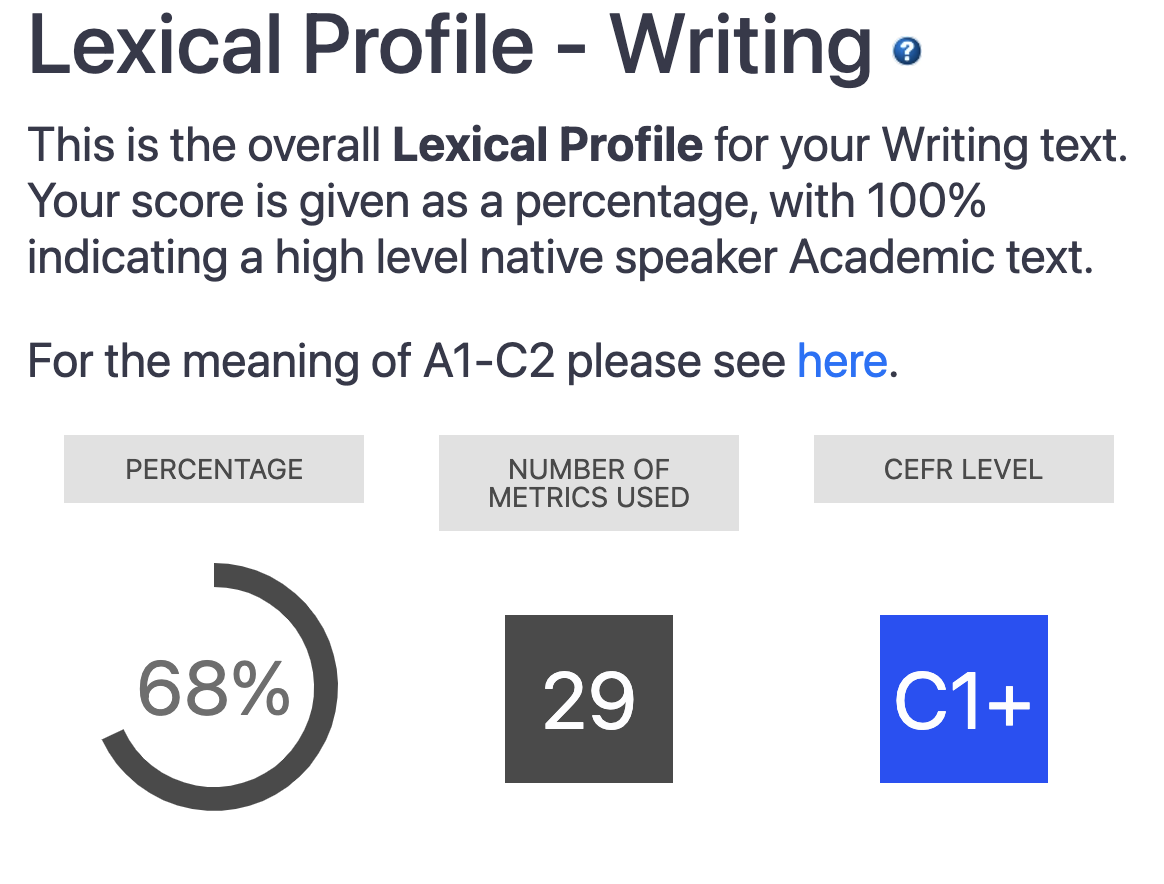
Scorecardで全体分析。なんとwritingのテクストとしてはCEFRのC1レベル!
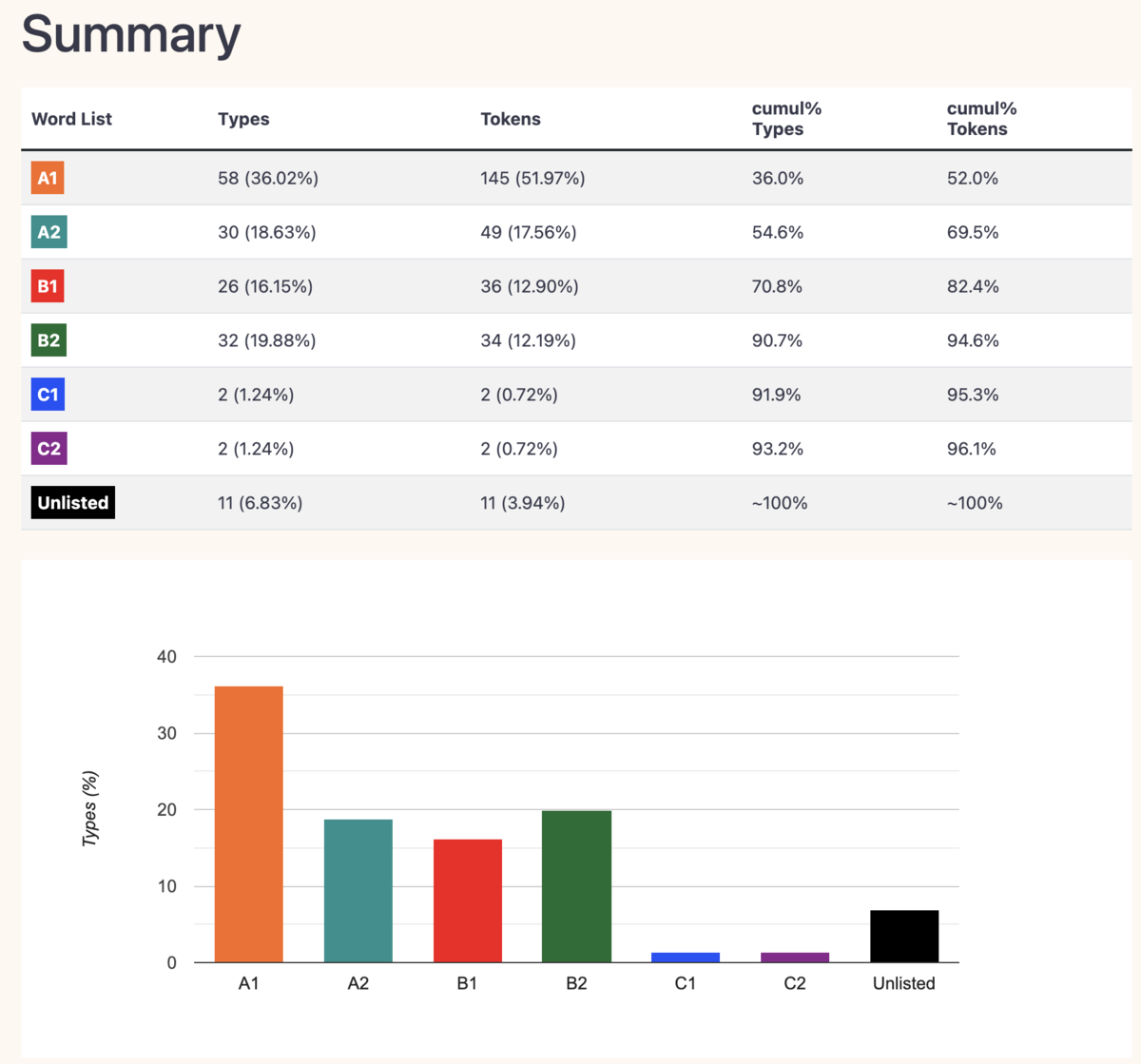
EVP (=English Vocabulary Profile)でのCEFRランク別の割合。B2の割合がちょっと高過ぎない?
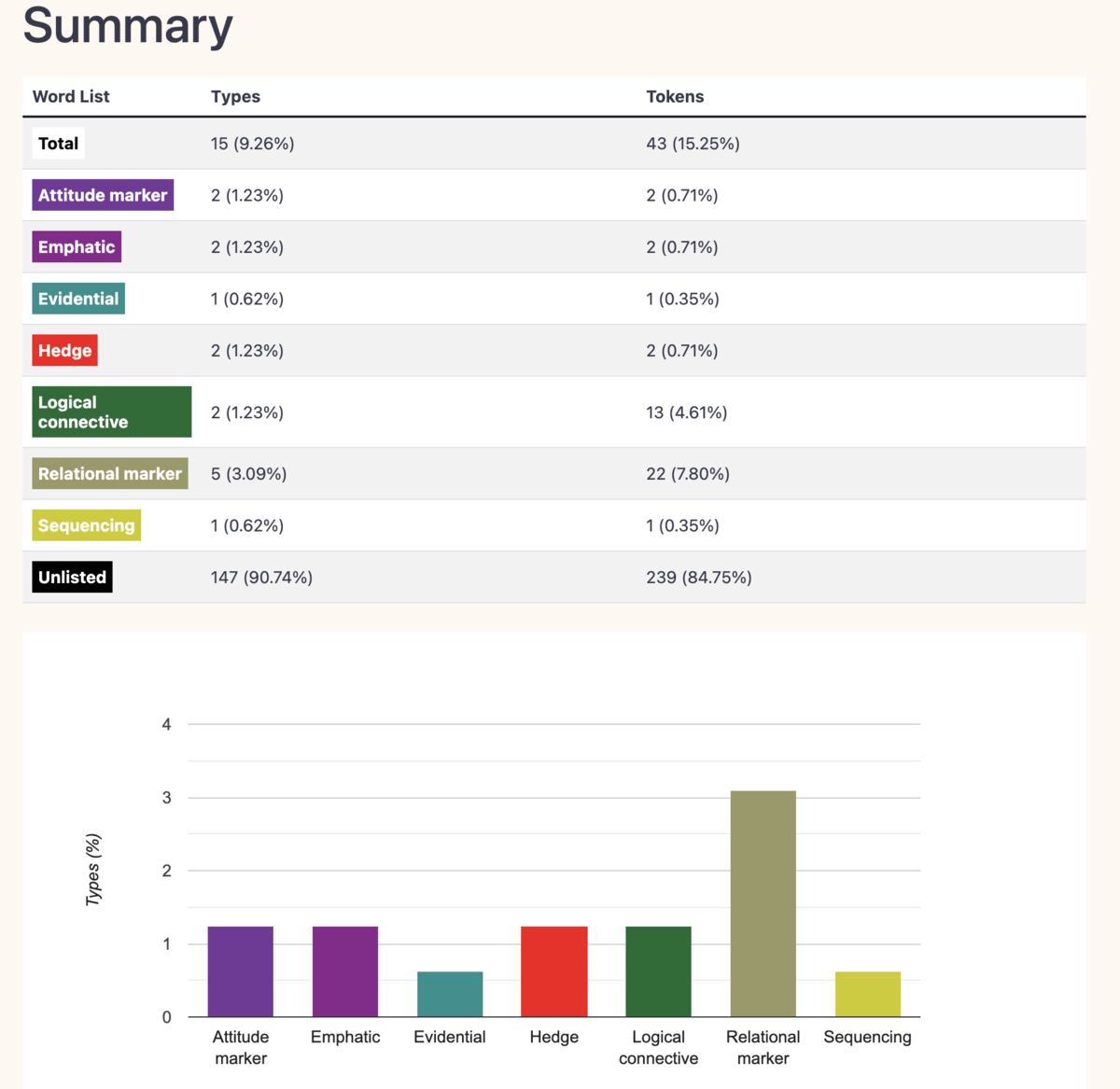
Metadiscourse (ディスコースを支え、整える語彙項目)は、とにかく使用が少ないの一言。
ということで、市井の英語講師に出来るのはこのくらいのことです。
最後はいつものことば。
- より良い英語でより良い評価。
本日はこの辺で。
本日のBGM: Slow dancing in a burning room (John Mayer)
🌟2025年1月22日追記:
この記事の続編がこちらになります。
是非併せてお読みください。
