Angular2/4のLifecycle Hooksを理解する
Angular2/4のLifecycle Hooksのうち、ngOnInitについて簡単な実験をして、
どのタイミングでngOnInitが発火するのか確かめてみることにします。
前提
以下のような親子関係があるとします。
親Componentから子Componentへ、parentValueという値が渡されているとしましょう。
0. プロジェクトを立ち上げて、必要なComponentを生成する
ng new lifecycle-oninit
ng g component child
1. templateファイルを以下のように修正
<!-- app.component.html ->
<app-child [parentValue]="parentValue"></app-child>
親ComponentであるAppComponentから、parentValueを受け取るようにします。
2. ChildComponentにInputを追記
/** child/child.component.ts */
import {
  Component,
  Input, // 追記
  OnInit // 追記
} from '@angular/core';
export class ChildComponent implements
OnInit // 追記
{
  @Input() parentValue; // 追記

  /** ここから */
  constructor() {
    console.log(this.parentValue);
    console.log("@@@constructor");
  }

  ngOnInit() {
    console.log(this.parentValue);
    console.info("@@@ngOnInit");
  }
  /** ここまで追記 */
}
親からparentValueを受け取れるように、@Input()を追加します。
3. AppComponentにparentValueを追記
/** app.component.ts */
export class AppComponent
{
  public parentValue = '親の値だよ';
}
ログをみてみる
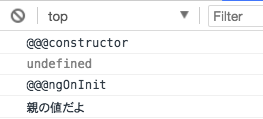
ログを見てみると、
constructor → ngOnInit
の順で呼ばれていることがわかります。
また、ChildComponentが生成された時点(constructorが呼ばれた時点)では、
親からのInputをまだ受け取っていないことがわかります。
ngOnInitが実行された時点では、親からのInputを受け取っています。
つまり、ngOnInitが実行されるタイミングは、
Inputを受け取ったあと
ということになります。
Angular公式ドキュメントでは
Use ngOnInit() for two main reasons:

1. To perform complex initializations shortly after construction.
2. To set up the component after Angular sets the input properties.
上にあるように、
constructionの後に実行される「複雑な初期化」を行うときや、
inputプロパティがセットされた後にcomponentをset upする際に使われるようです。
