というNBER論文が上がっている(ungated版へのリンクがある著者の一人の論文解説ページ)。原題は「Earnings Instability」で、著者はPeter Ganong、Pascal J. Noel、Christina Patterson、Joseph S. Vavra、Alexander Weinberg(いずれもシカゴ大)。
以下はその要旨。
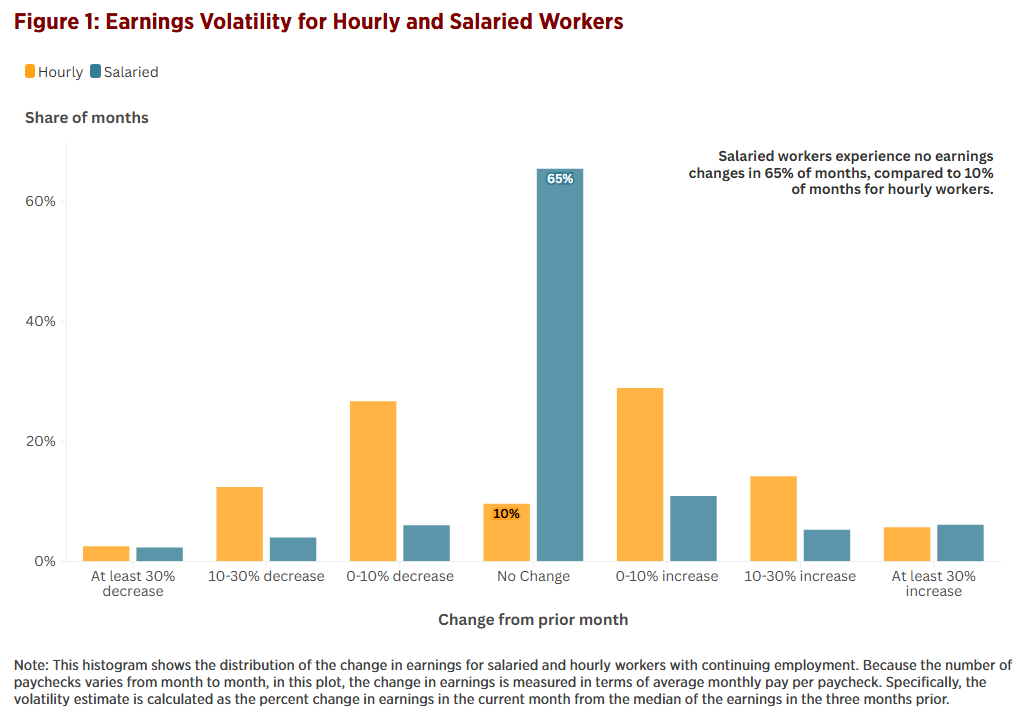
This paper uses high-frequency administrative data to show that the majority of U.S. workers experience substantial month-to-month fluctuations in pay, even within ongoing employment relationships. This earnings instability is pervasive, but it has been masked in past analysis of annual data. Moreover, this instability is unequally distributed: lower-income, hourly workers face more instability than higher-income, salaried workers. This is because earnings instability arises in large part from firm-driven fluctuations in hours. This earnings instability is a meaningful source of economic risk: we provide causal evidence that it increases consumption volatility and also leads to greater job separations, and we find that workers have a high willingness to pay to reduce earnings instability. These findings suggest that short-term earnings risk is a significant and previously underappreciated feature of the labor market.
(拙訳)
本稿は高頻度の行政データを用いて、米国の労働者の大多数の給与が、継続的な雇用関係にある場合でも、月ごとに顕著に変動していることを示す。この所得の不安定性は広範囲に亘るものだが、過去の年次データの分析では覆い隠されていた。また、この不安定性の分布は均一ではない。低所得の時間給労働者は、高所得のサラリーマンよりも不安定性が高い。これは、所得の不安定性が、企業側に起因する労働時間の変動に因るところが大きいためである。この所得の不安定性は、経済的リスクの有意な要因になる。これが消費の変動を上昇させるほか、離職率も高めるという因果的な証拠を我々は提示する。また我々は、所得の不安定性を減らすために労働者が対価を支払う意思が大いにあることを見い出した。以上の発見は、短期の所得リスクが、労働市場における有意かつこれまで過小評価されてきた特徴であることを示している。
以下は解説ページの図。
日本でも同様の傾向があるかどうか気になるところである。もしあるのならば、毎月勤労統計調査の給与の数字は、季節調整値においても、そういった要因によって攪乱されているのかもしれない。
