というNBER論文が上がっている(ungated版)。原題は「Turning Points in Inflation: A Structural Breaks Approach with Micro Data」で、著者はAlberto Cavallo(ハーバード大)、Gaston Garcia Zavaleta(スタンフォード大)。
以下はその要旨。
We introduce a novel methodology for detecting inflation turning points that combines high-frequency, disaggregated price data with standard structural break techniques to provide policymakers with more timely and precise signals of inflation dynamics. The methodology consists of three key components: measuring inflation as the slope of the log price index rather than using conventional inflation rates, employing structural break techniques to detect shifts in this slope, and leveraging highly disaggregated price indexes to identify trend breaks at a granular level. We apply this approach to study two critical recent episodes: Argentina’s 2024–2025 disinflation and the inflationary impact of U.S. tariff adjustments in 2025. For Argentina, we detect a broad-based disinflationary turning point in May 2024. For the U.S., we find evidence of a turning point in February 2025, with significant sectoral inflation accelerations despite stable aggregate inflation measures. These applications demonstrate the utility of our approach for enhancing real-time inflation monitoring and policy decision-making.
(拙訳)
我々は、インフレの動学のよりタイムリーで正確なシグナルを政策担当者に提供するために、高頻度のミクロ価格データと標準的な構造変化技法*1を組み合わせた、インフレの転換点を検出する新たな手法を提示する。この手法は3つの主要な要素から成る。従来のインフレ率を用いずに対数価格指数の傾きとしてインフレを測定すること、この傾きの変化を検出するために構造変化技法を用いること、および、粒状レベルでトレンド変化を識別するために極めて細分化された価格指数を利用すること、である。我々はこの手法を適用して直近の重要な2つの事例を調べた。アルゼンチンの2024-2025年のディスインフレと、2025年の米国の関税調整のインフレ的な影響である。アルゼンチンについて我々は、広範なディスインフレ的な転換点を2024年5月に検出した。米国については、2025年2月の転換点という実証結果を我々は見い出した。マクロのインフレ指標は安定していたが、部門別のインフレは有意に加速していた。こうした適用例は、リアルタイムのインフレ監視と政策意思決定を拡張する上での我々の手法の有用性を示すものである。
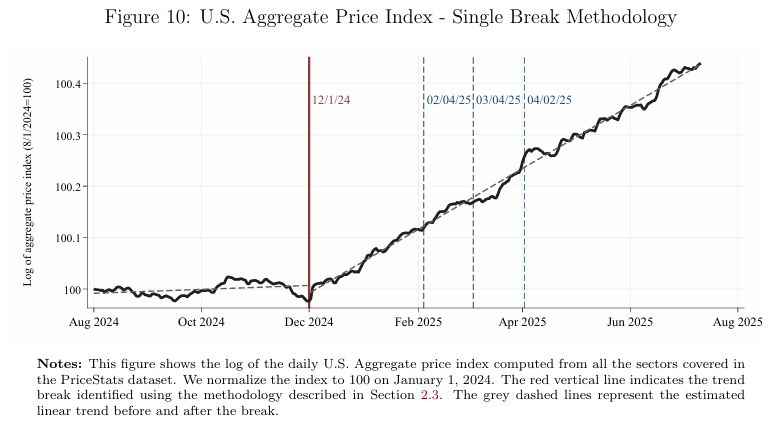
米国のマクロレベルでは、下図のように2024年12月に輸送やエネルギー部門の価格上昇に起因する構造変化を検出したが、関税に起因する構造変化は検出できなかったとの由。
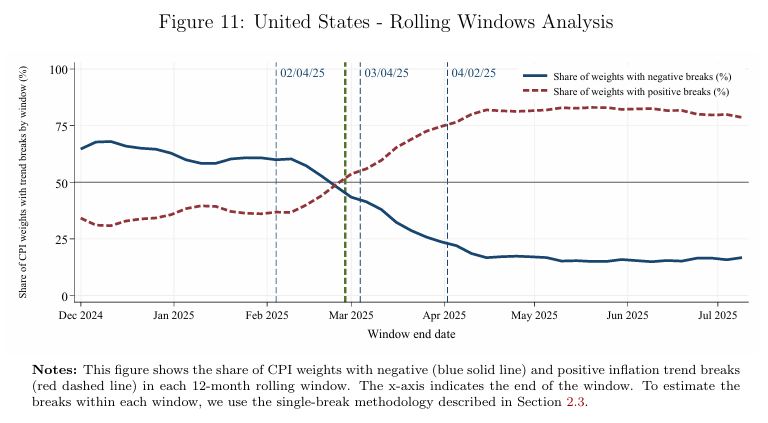
一方、今回の手法によるミクロの構造変化の割合を示した下図では、2月に構造変化を検出したとのことである。
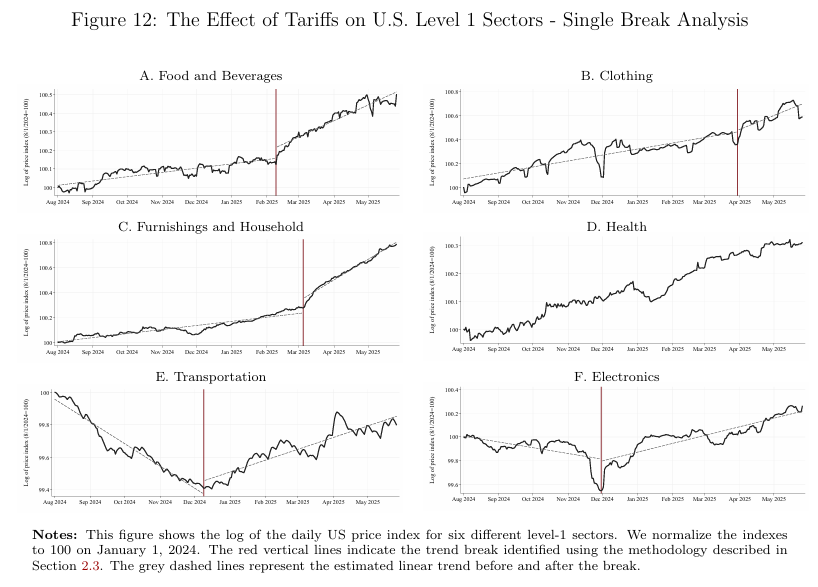
部門別では、家庭用品と衣服で構造変化が検出されたとの由。
*1:cf. 構造変化 - Wikipedia。
