というECBブログ記事をMostly Economicsが紹介している。原題は「How will European consumers react to US tariffs?」で、著者はAdam Baumann、Luca Caprari、Maarten Dossche、Georgi Kocharkov、Omiros Kouvavas。以下はその冒頭の引用の孫引き。
The newly imposed US trade tariffs on European products are causing European consumers to think twice about what’s in their shopping cart. Typically, the extent to which tariffs affect consumers depends on the price elasticity of demand for the affected products and services – meaning consumers may switch to cheaper alternatives if prices rise. However, the recent US tariffs may lead to a broader shift in preferences, causing Europeans to move away from US products and brands altogether, regardless of price changes.
This blog post uses data from the ECB’s Consumer Expectations Survey (CES) to get a better idea of how consumers might react to potential tariffs and the reasons behind their choices. In March 2025 CES participants were asked how likely they were to switch away from US products in response to potential US tariffs and a possible retaliation from the EU.[1] Consumers were presented with three different scenarios: potential tariff increases of 5%, 10% or 20%. Respondents were also asked about their main reason for substituting or not substituting US products, with options referring to price, preference or the lack of alternatives.
Results show that consumers are very willing to actively move away from US products and services. The median substitution score was 80 on the 0 to 100 scale, where 0 indicates no willingness to buy alternatives to US products and 100 signifies a strong willingness to do so.
(拙訳)
欧州製品に対して新たに課された米国の貿易関税により、欧州の消費者は購入する対象を良く考えるようになった。関税がどの程度消費者に影響を及ぼすかは、通常、影響を受ける製品とサービスの需要の価格弾力性に依存する――即ち、価格が上昇すると消費者はより安価な代替品に切り換える。しかし、今回の米国の関税は、選好の広範囲の変化につながっており、欧州の人々が価格に関係なく米国の製品とブランドから完全に離れる動きを引き起こしている。
本ブログ記事はECBの消費者予想調査(CES*1)のデータを用いて、課され得る関税に消費者がどのように反応するか、およびその選択の背後にある理由についての理解を深める。2025年3月にCES参加者は、課され得る米国の関税とあり得るEUの報復への反応として、米国製品から他に切り替える可能性がどの程度あるかを尋ねられた。消費者には3つの相異なるシナリオが提示された。5%、10%、もしくは20%の関税引き上げである。回答者はまた、米国製品から乗り換える、もしくは乗り換えない主な理由も、価格、選好、代替品の欠如という選択肢から尋ねられた。
結果が示すところによれば、消費者は非常に積極的に米国の製品とサービスから他に切り替えようとしていた。代替スコアの平均は0から100のスケールで80であった。ここで0は米国製品の代替品を買う気が無いことを示し、100はその意思が非常に強いことを表す。
結果を説明した以下の文章と図は、トランプ関税それ自体が反米感情とも言うべき選好の変化を引き起こしたことを示している。
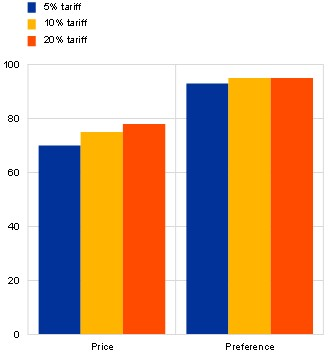
In the euro area, however, it seems that the mere presence of a tariff would prompt a large share of consumers to reconsider what they buy. Overall, around 44% of respondents expressed a willingness to shift their spending away from US products, irrespective of the tariff rate and primarily due to a preference to switch away (Chart 1, panel b). For this group, the median substitution score was 95 and remained almost unchanged across the randomised tariff increases of 5%, 10% and 20%.
(拙訳)
だが*2ユーロ圏では、関税の存在だけで消費者の大きな割合が購入対象を再検討するように思われる。全体では、約44%の回答者が、関税率に関係なく、また、切り替えたいという選好に主に基づき、支出を米国製品から他に振り向ける、という意思を示した(図1パネルb)。この集団では、代替スコアの平均は95で、ランダムに決めた5%、10%、20%の関税引き上げ幅によってほぼ変わらなかった。
Chart 1
Willingness to substitute and reason for substitution
a) Willingness to substitute by reason and hypothetical tariff size
(percentage willingness)
b) Reason for substitution
(percentage of respondents)

Source: CES.
Notes: The latest observation is for March 2025. Weighted data. Median percentage.
所得階層別の結果もそれを裏付けているという。
Contrary to the usual pattern, our findings suggest that the more people earn, the more likely they are to switch. This unexpected result could be attributed to the fact that higher-income households may be more motivated by preference than by price concerns.
(拙訳)
通常のパターンとは逆に、収入の高い人々ほど切り替え傾向が強いことを我々の結果は示している。この予想外の結果は、高収入の家計ほど価格への懸念ではなく選好が動機となっていることに起因している。
Chart 2
Willingness to substitute and reasons for substitution – income and consumption
a) Willingness to substitute by income quintile and discretionary consumption
(percentage willingness)

b) Reason for substitution by income quintile and discretionary consumption
(percentage of respondents)

Sources: CES.
Notes: The latest observation is for March 2025. Weighted data. Income and consumption quintiles are calculated within each country.
*1:cf. 景気循環変動とインフレはどの程度の犠牲を伴うのか? 世論調査手法 - himaginary’s diary。
*2:この直前では、関税による価格上昇を予想すると買い溜めに走るというGorodnichenko=Coibion=Weberの米国の調査結果が引用されている。
